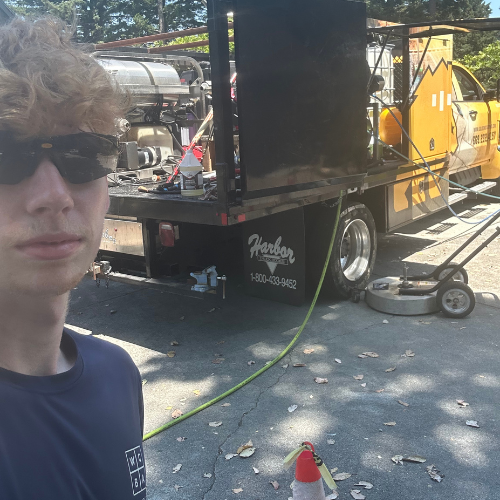

How California's AB 5 ABC test affects property owners who hire individual cleaners or cleaning companies that use independent contractors.

Under Labor Code §2775, A Worker Is Presumed To Be An Employee Unless All Three ABC Conditions Are Met. This Paper Explains What That Means For Owners Who Hire Cleaners Directly Or Through A Cleaning Company.
Download PDFExecutive Summary
California's "ABC test," the worker classification test associated with Assembly Bill 5, now appears in Labor Code §2775. Under it, a person paid to provide labor or services is presumed to be an employee unless the hiring entity proves all three conditions. For property owners and managers, the question matters in two ways: when they hire an individual cleaner directly, and when they rely on a cleaning company that staffs jobs with workers it calls independent contractors. This paper summarizes the statute and the state's own guidance.
Key Points
- Employee By Default: A worker is an employee unless the hiring entity demonstrates all three ABC conditions. Lab. Code §2775(b)(1)
- All Three Prongs: Free from control, outside the usual course of the hiring entity's business, and independently established in the trade. §2775
- Penalties For Willful Misclassification: $5,000 to $25,000 per violation under Labor Code §226.8, per the Labor Commissioner. DLSE FAQ
- Workers' Comp Follows Employment: Every employer must secure workers' compensation coverage. Lab. Code §3700
The ABC Test
Section 2775 provides that "a person providing labor or services for remuneration shall be considered an employee rather than an independent contractor unless the hiring entity demonstrates that all of the following conditions are satisfied." §2775(b)(1)
| Prong | Statutory Condition |
|---|---|
| A: Control | The person is free from the control and direction of the hiring entity in performing the work, under the contract and in fact. |
| B: Usual Course | The person performs work outside the usual course of the hiring entity's business. |
| C: Independent Business | The person is customarily engaged in an independently established trade, occupation or business of the same nature as the work. |
Source: Cal. Labor Code §2775(b)(1)(A)–(C).
Applying It To Exterior Cleaning
Prong B is often the hardest for a cleaning company: a window cleaning business that pays individuals to clean windows is asking them to do work squarely within its own usual course of business. That is why owners should expect the technicians a cleaning company sends to be its employees.
Why Misclassification Matters To Owners
According to the Labor Commissioner's Office, employers found to have misclassified workers "may face significant liability for restitution and penalties," including minimum wage and overtime, unemployment insurance taxes and workers' compensation insurance, plus payroll taxes, penalties and interest. Willful misclassification carries civil penalties of $5,000 to $25,000 per violation. DLSE FAQ Q10 Because §3700 requires every employer to secure workers' compensation, a vendor that misclassifies its crew may also lack coverage for injuries on your property (see G4). §3700
Questions To Ask Contractors
| Question | Why It Matters |
|---|---|
| Are The Technicians On Site W-2 Employees? | ABC test presumption (§2775) |
| Can You Provide A Current Workers' Comp Certificate? | §3700 coverage duty |
| Who Supervises And Directs The Crew? | Prong A control |
| Do You Subcontract Any Work, And To Whom? | Identifies who employs the workers |
| Will The COI Name Us As Additional Insured? | Contract risk transfer (G4) |
If you hire an individual cleaner directly rather than a company, the ABC test applies to your relationship with that person. Talk to counsel before treating them as an independent contractor.
Sources
- Cal. Labor Code §2775. leginfo.legislature.ca.gov/faces/…
- Cal. Labor Code §3700. leginfo.legislature.ca.gov/faces/…
- Labor Commissioner's Office, Independent Contractor FAQ. dir.ca.gov/dlse/faq_independentcontractor.htm
This paper summarizes regulations and agency guidance for general information and is not legal advice. Requirements may change and vary by city; consult the current text, your local agency and qualified professionals.