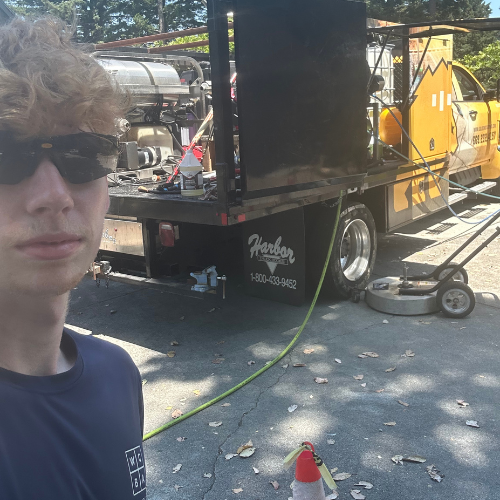
Grayson Dyer is the founder and owner of Window Cleaning Bay Area, one of the Bay Area’s fastest-growing exterior cleaning companies. He launched the business in 2022 while still a sophomore at Los Gatos High School, starting with little more than a bucket, a squeegee, and a big vision for what professional home maintenance could look like.
Under his leadership, Window Cleaning Bay Area has expanded into a full-service exterior cleaning brand specializing in window cleaning, pressure washing, solar panel cleaning, gutter cleaning, and holiday light installation. Grayson’s focus on quality, innovation, and customer experience has helped position WCBA as a trusted name among homeowners and property managers across the Bay Area.
Beyond day-to-day operations, Grayson is passionate about entrepreneurship, leadership, and training the next generation of service professionals. He’s built detailed systems for safety, efficiency, and client satisfaction—turning what began as a high school side hustle into a scalable, process-driven company built for long-term growth.
When he’s not managing crews or developing new business systems, Grayson enjoys creating educational content for homeowners and aspiring service entrepreneurs, sharing insights on marketing, operations, and sustainable growth in the home-services industry.
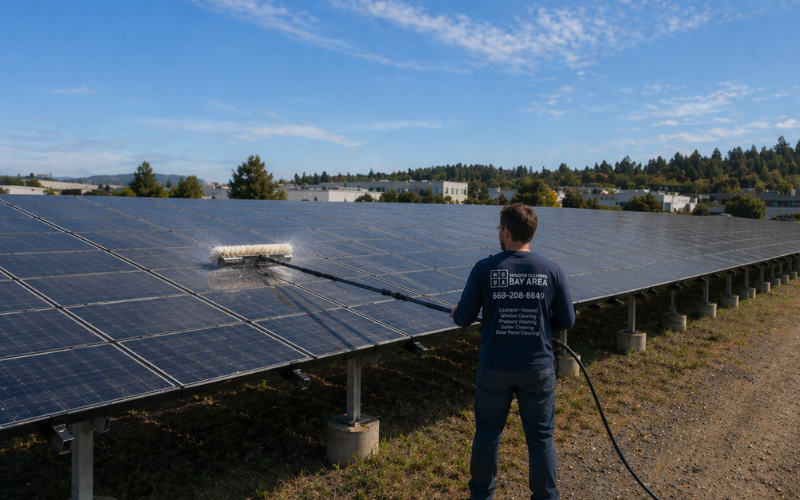
Typical Bay Area solar panel cleaning costs, safe panel-cleaning methods and what affects the estimate.
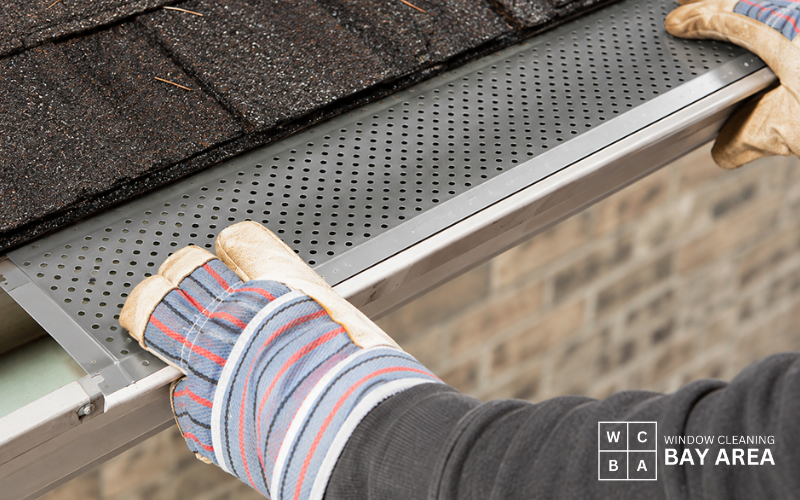
Typical Bay Area gutter cleaning costs, what the service includes and which access and debris factors affect an estimate.

Safe ways to manage solar panel dust, pollen and debris, with professional cleaning guidance and typical costs.
Why spring and fall suit twice-yearly Bay Area window cleaning, plus signs glass needs attention sooner.

How to plan window and solar panel cleaning separately, with safe access and approved Bay Area price ranges.

How professionals handle second-story windows safely, plus access considerations and typical Bay Area costs.

A new homeowner guide to window condition, access, add-ons, maintenance and typical Bay Area cleaning costs.

Plan window cleaning before listing photography, including glass, tracks, screens and typical Bay Area costs.
Compare gutter guards with regular gutter cleaning and understand inspection needs and typical Bay Area costs.
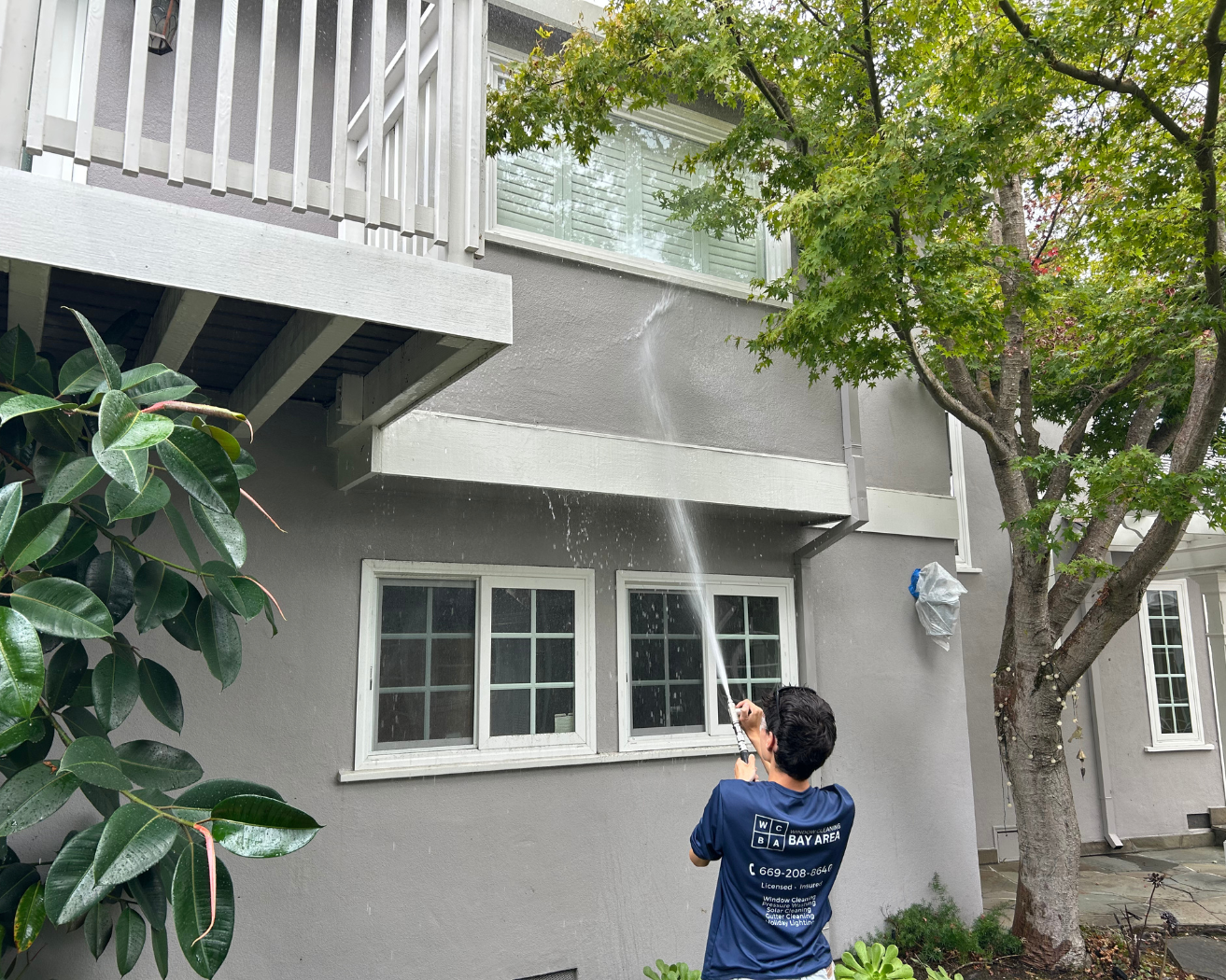
Learn when to use soft washing or pressure washing and see typical recent Bay Area price ranges.

Typical house washing costs in the Bay Area, plus soft washing, surface cleaning, gutter and solar panel cleaning prices.

Compare DIY window cleaning with hiring a professional for cost, safety, hard water stains and second-story glass.

How Bay Area homeowners and townhome residents can plan window cleaning scope, access, schedules and add-ons.
Typical Bay Area residential window cleaning costs, approved add-ons and the factors that determine your estimate.
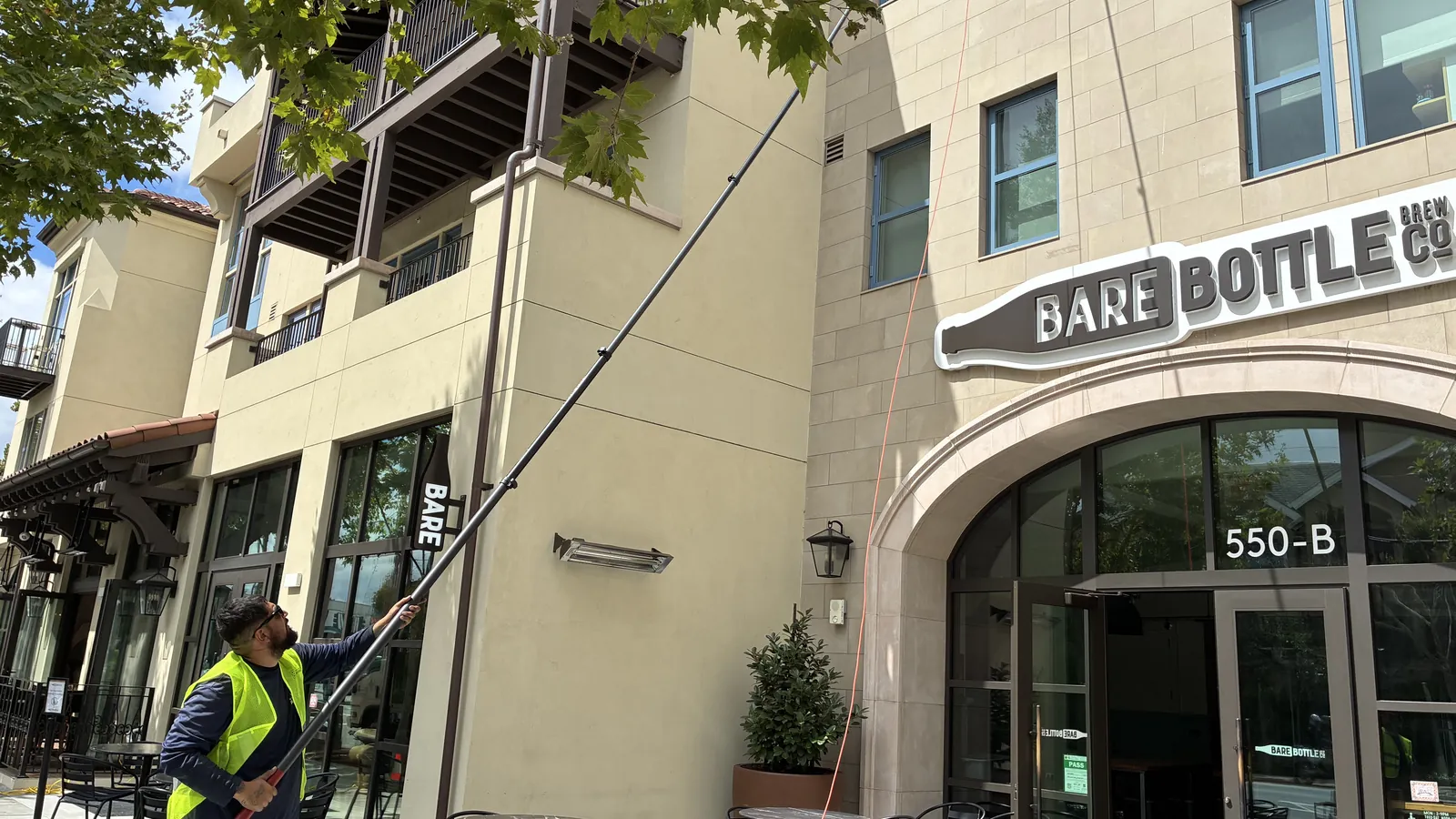
A practical guide to commercial window cleaning schedules, access, insurance and vendor questions for Bay Area property managers.
Compare water-fed pole and traditional window cleaning for commercial exteriors, interiors and detail glass.
Compare water-fed poles, traditional squeegees, lifts and rope access for Bay Area commercial window cleaning.

Recent commercial window cleaning jobs start around $875 per visit. See what changes cost, how frequency affects pricing and how high-rise work is quoted.
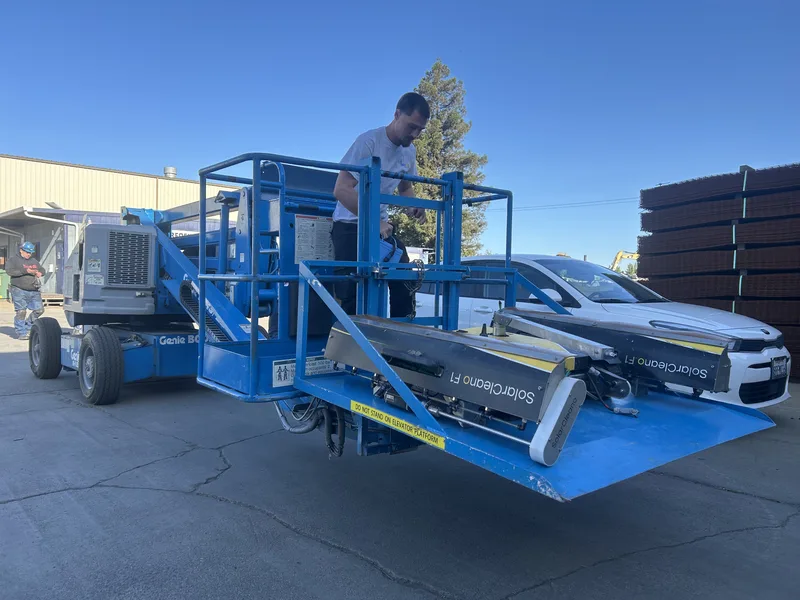
A simple method for estimating whether commercial solar panel cleaning pays for itself, what changes the return, and how to set a cleaning schedule.

What trash enclosure cleaning covers, why it needs careful wash water handling, and how restaurants and apartment communities schedule it.

A guide to the areas commercial pressure washing covers, from sidewalks and entries to trash enclosures and parking, and the Bay Area stormwater rules that apply.
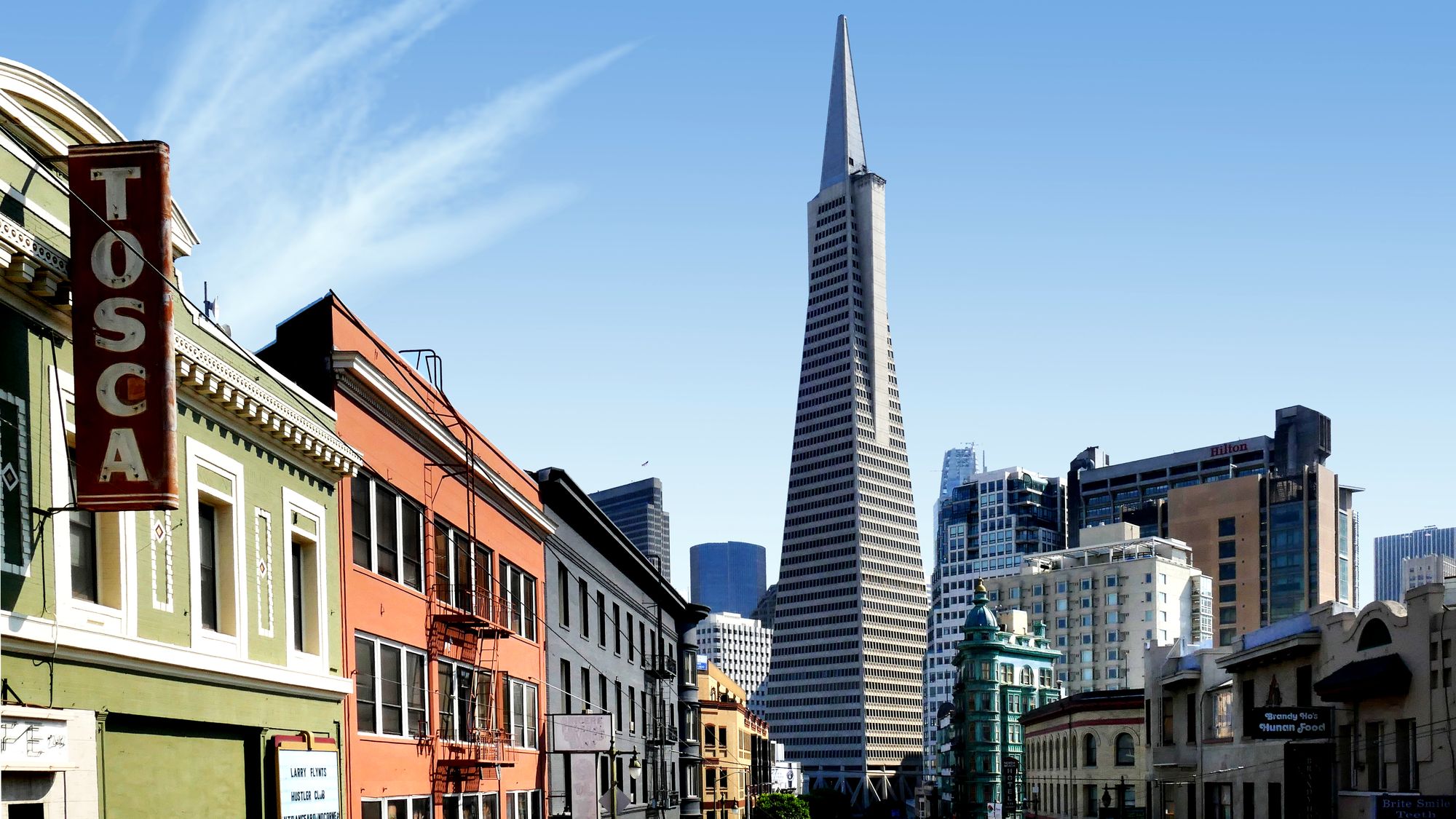
What San Francisco's facade inspection program requires of owners of buildings 15 or more stories tall.
A prequalification checklist for high-rise window and facade contractors, built from federal and California requirements.
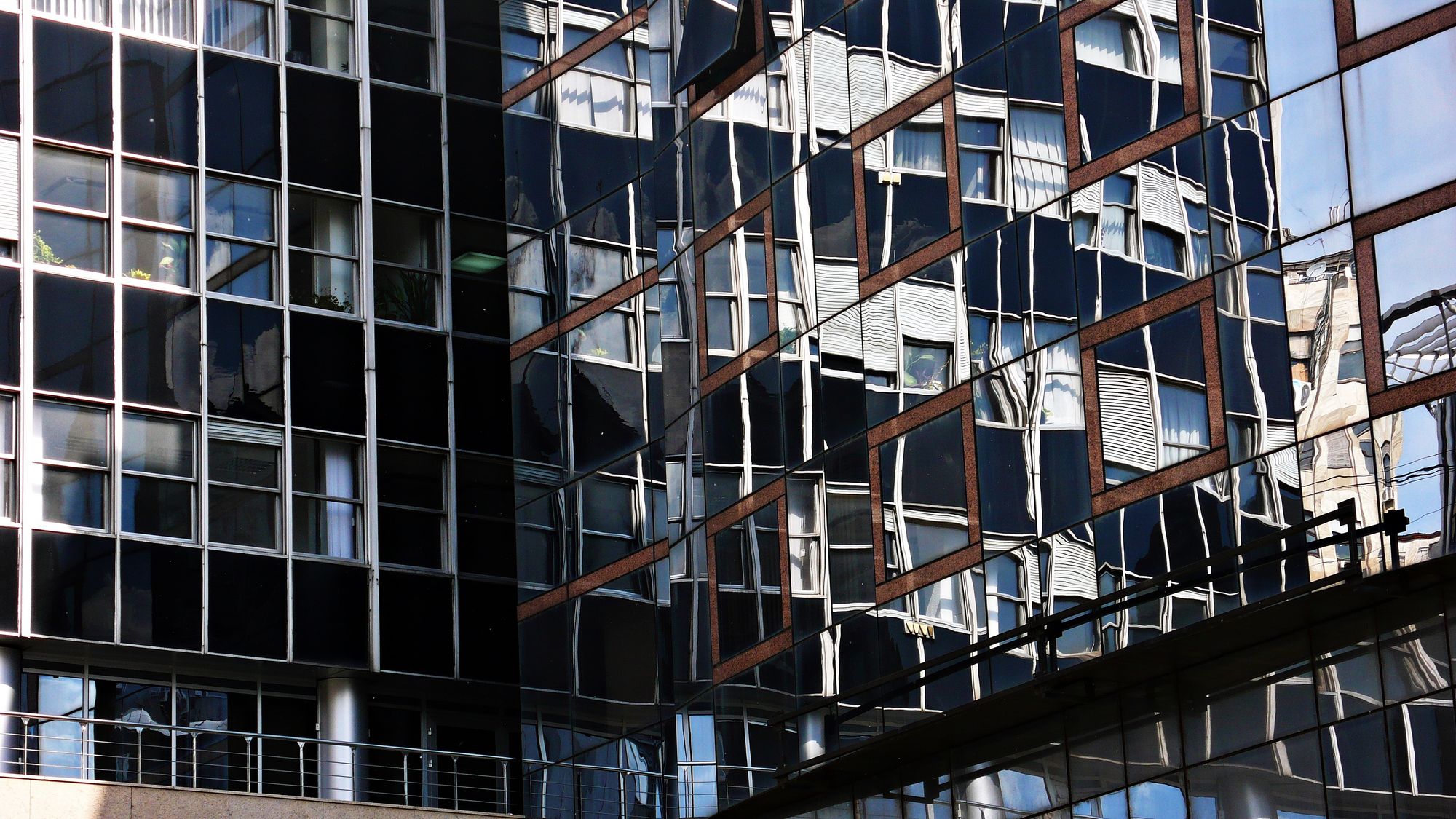
Published glass industry care guidance that matters most on tall buildings with coated, tinted or heat-treated glass.
The inspection, testing and recordkeeping schedule owners must follow for davits, roof cars and powered platforms.

The design-stage facade access requirements architects, developers and owner's reps should coordinate early on a new tower.
What California's §3283 requires of window cleaning belt anchors and fittings, from approval and placement to annual inspection.
What federal and California rules actually say about wind limits for powered platforms and rope descent systems.
How California's §3295 and federal 1910.66 govern building maintenance units, davits and swing stages used for facade access.
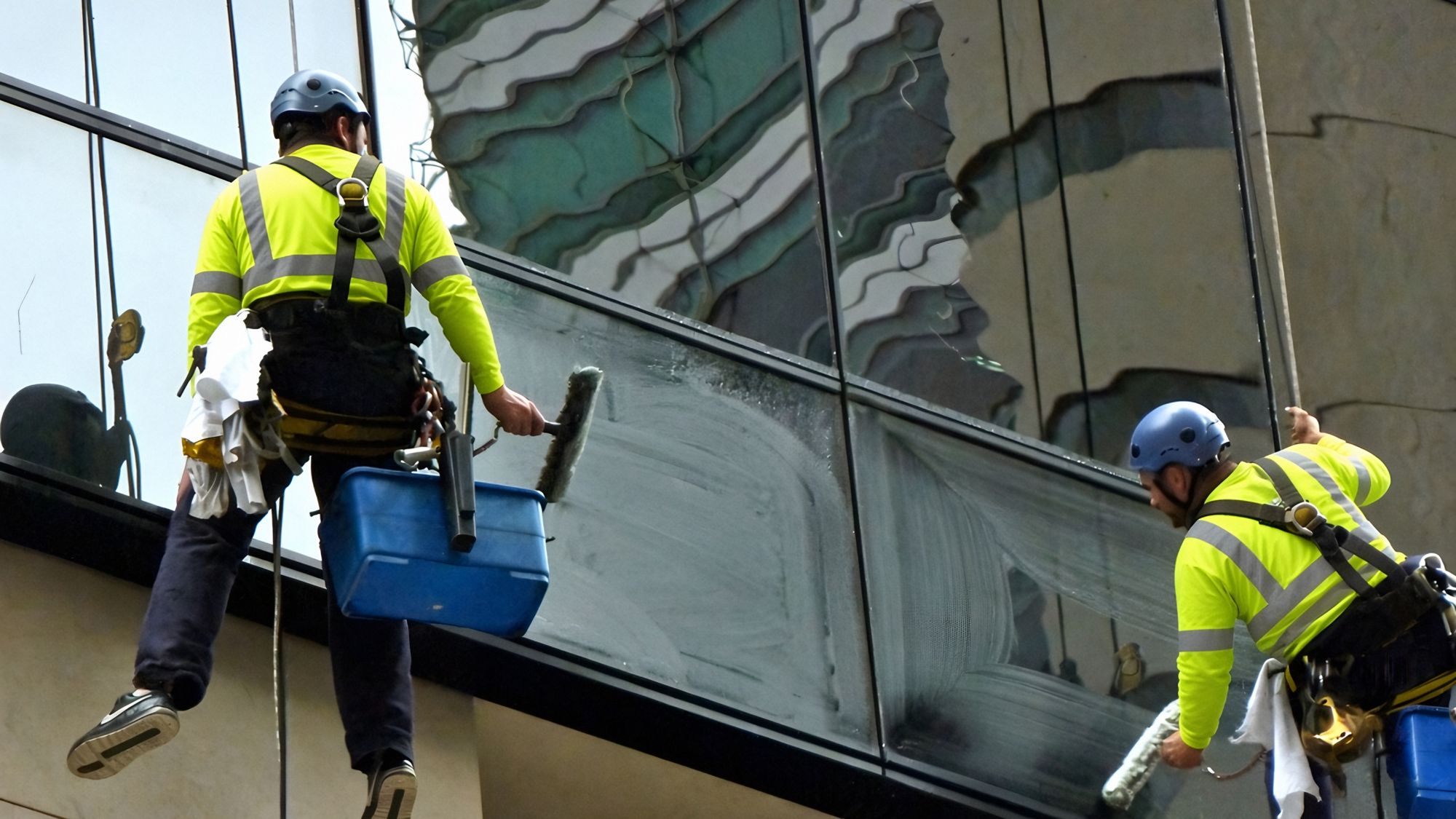
The federal and California rules owners should understand before rope descent work starts on their tower.
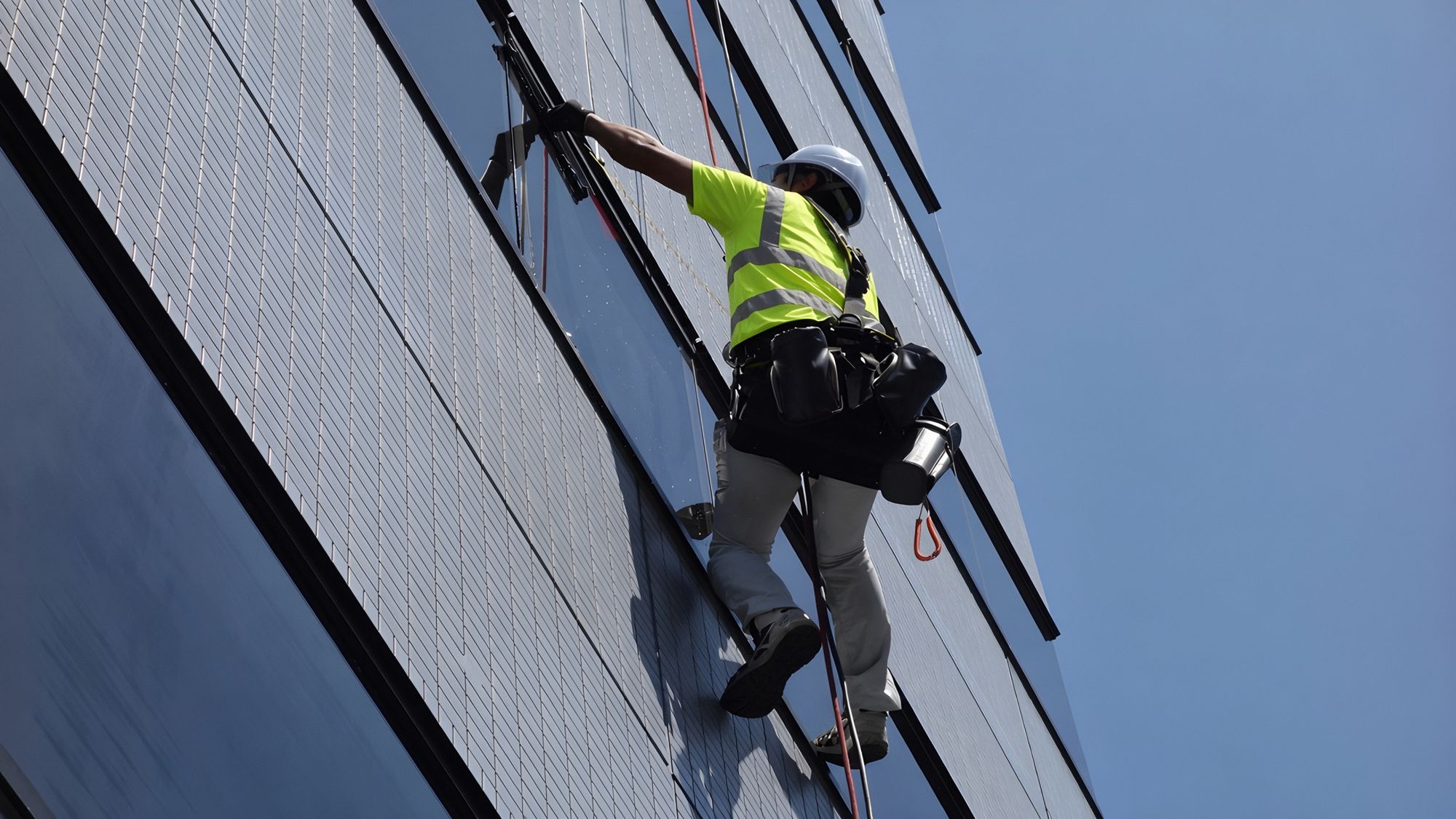
What federal OSHA and California Title 8 require building owners to provide about roof anchorages before rope descent work begins.

Who must comply with San Francisco's facade inspection program, the inspection cycle, and how routine cleaning supports it without replacing it.

What Civil Code §5550 requires of HOA reserve studies and how boards can decide where exterior cleaning costs belong.

San Francisco's graffiti removal deadline, the state sidewalk duty for property owners, and the wash water rules that apply when cleaning a frontage.

What glass industry guidance says about rundown, mineral staining and cleaning practices that protect commercial glazing.
How California's AB 5 ABC test affects property owners who hire individual cleaners or cleaning companies that use independent contractors.

What Cal/OSHA's heat illness standard requires of outdoor exterior cleaning crews, and what property managers should expect to see on site.
Typical window cleaning schedules for offices, storefronts, medical buildings and HOA communities, based on WCBA field experience.

How federal and California fall protection rules apply to ladders, aerial lifts and rope descent work on building exteriors.

When California prevailing wage rules apply to public agency window cleaning and pressure washing contracts, and the DIR steps bidders should know.

What NREL's soiling research says about lost solar output and how commercial owners can set a site-specific cleaning schedule.

What the ANSI/IWCA I-14.1 window cleaning safety standard covers and how it sits alongside the binding Cal/OSHA and OSHA anchor rules.
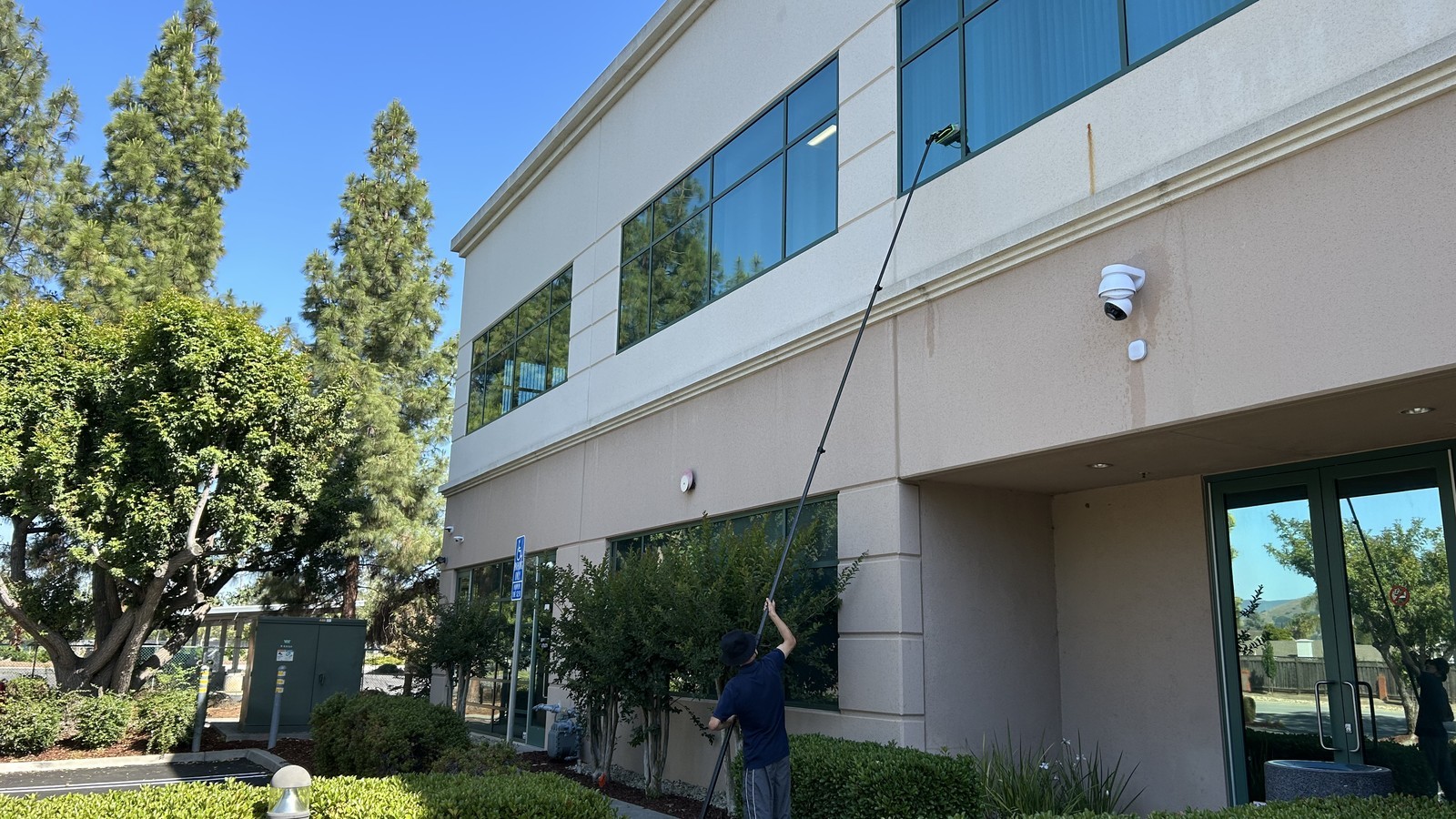
The insurance and license documents California property managers should collect from window cleaning and pressure washing contractors, and how to verify them.

What the Bay Area stormwater permit means for pressure washing commercial property: the non-stormwater ban, city enforcement and wash-water capture practices.

What Cal/OSHA §3282, §3283 and OSHA 1910.27 require Bay Area high-rise owners to give window cleaners: written assurance, inspections, OPOS and anchor letters.

What California Title 8 §3282, §3283 and OSHA 1910.27 require of Bay Area building owners: written assurance, annual inspection, OPOS and anchor rules.
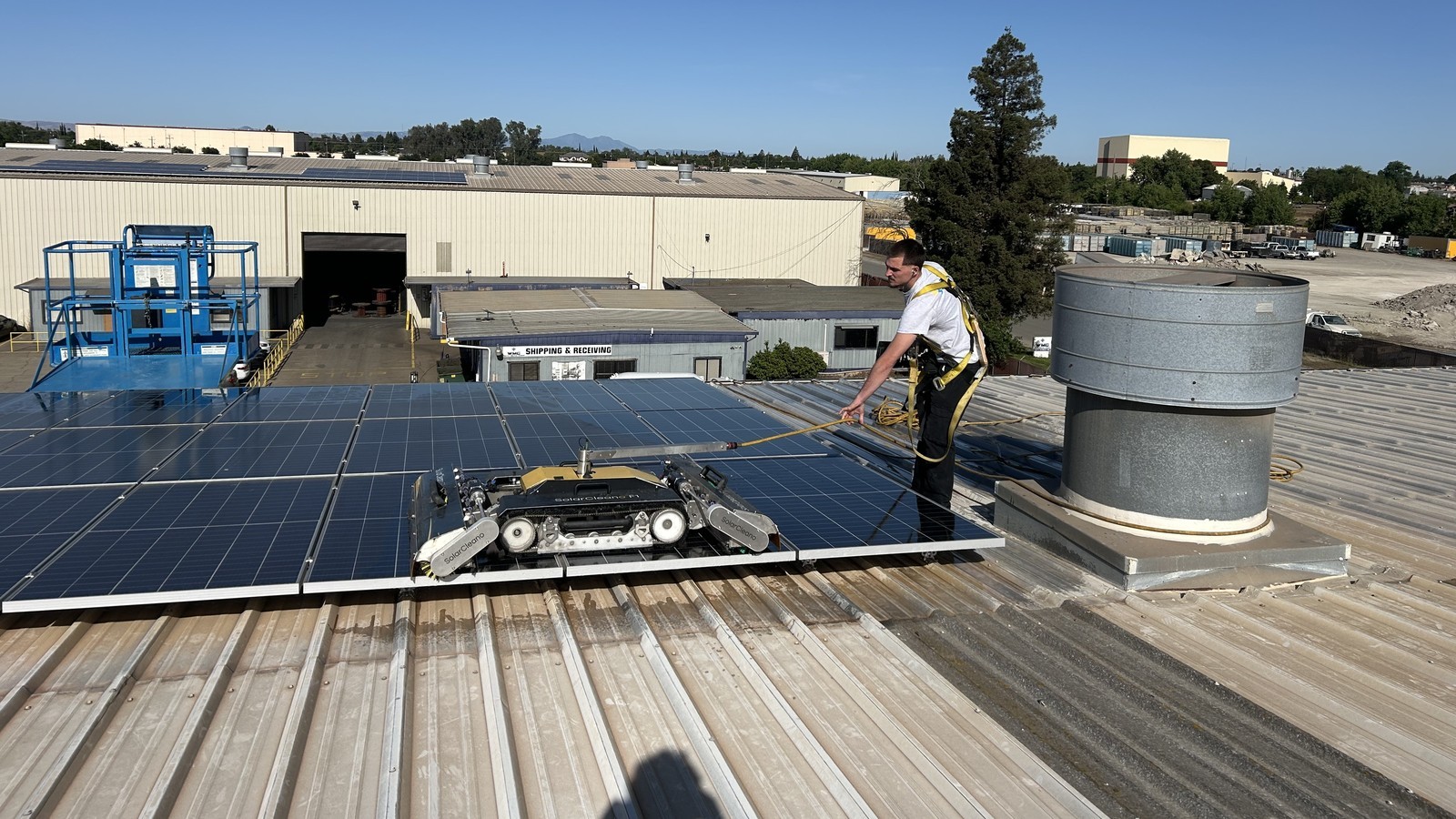
How commercial solar owners can keep panel cleaning consistent with module warranties, based on NREL O&M best practices: methods, water quality and records.
How often commercial surfaces are typically pressure washed, Bay Area factors that change the schedule, and how to build a surface-by-surface calendar.
A look at our exterior window cleaning project at Springline Residences, a 185-unit apartment community in Menlo Park, and what property managers should plan for on multifamily window cleaning.
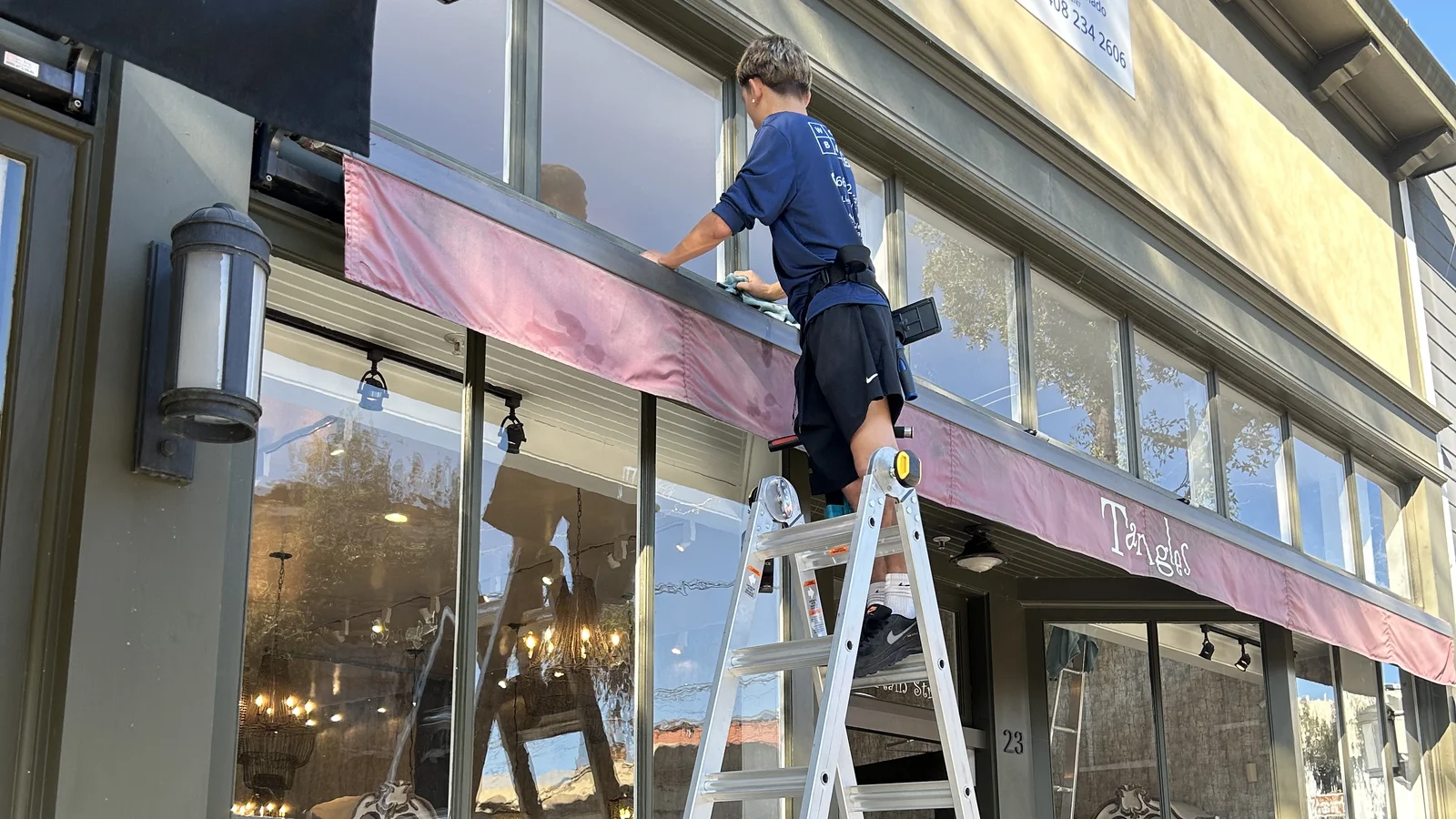
What Bay Area retailers and restaurants should expect from a storefront window cleaning service: route frequency, inside and outside glass, early service, and setting up a recurring account.

Recommended commercial window cleaning frequency by property type, the Bay Area conditions that make glass dirty faster, and how to build a simple window maintenance calendar.
How commercial window cleaning is priced in the Bay Area: per-pane, per-visit, and contract models, the factors that drive cost, how recurring service helps, and how to get an accurate quote.
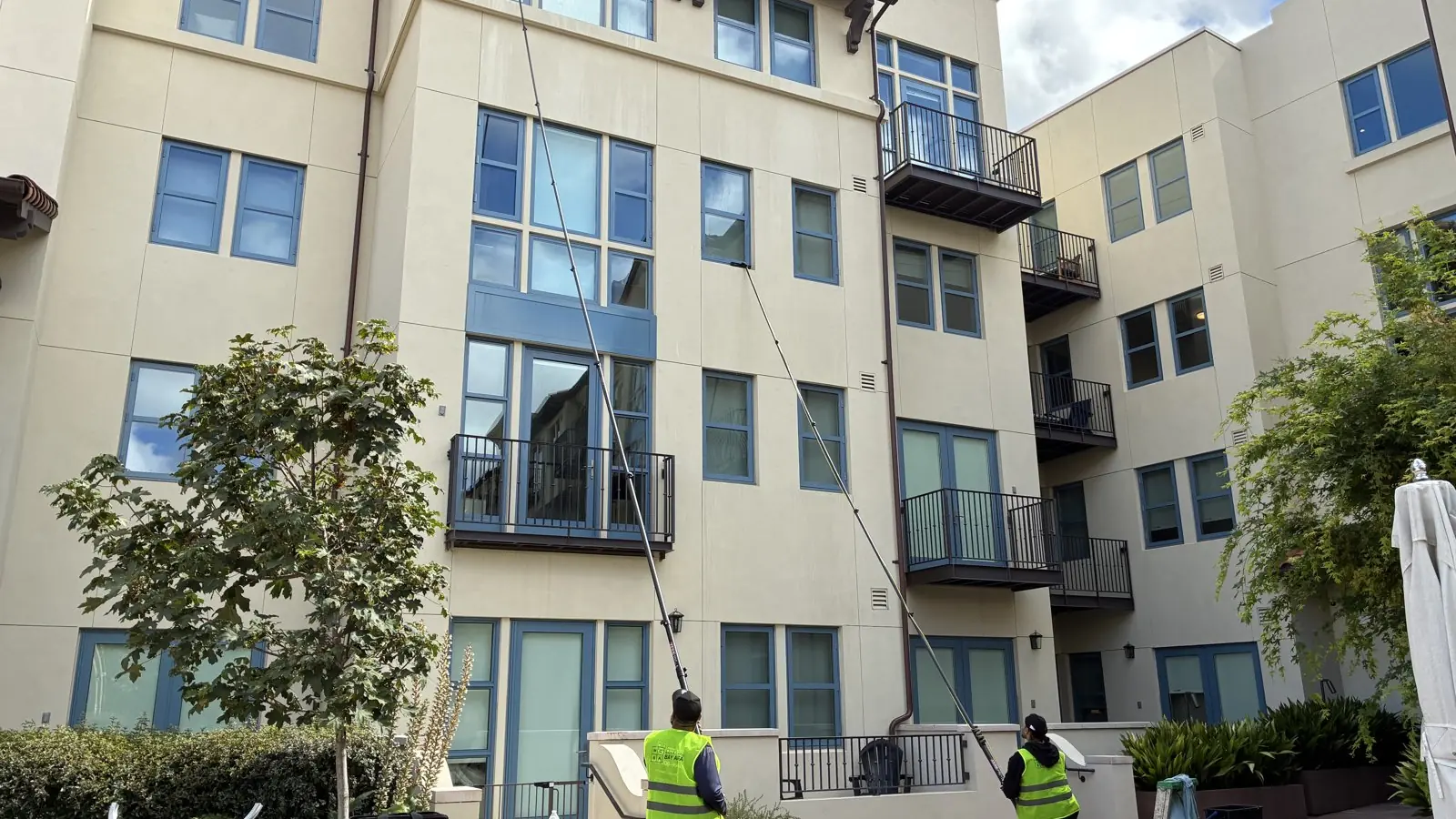
A practical guide for Bay Area property and facility managers: what commercial window cleaning includes, how to set a recurring schedule, how pricing is structured, and what to ask about safety and tenant coordination.

Spring and summer are the best time to reset your home’s exterior because brighter days make buildup more visible and outdoor spaces get used more often. A one-day refresh starts with house washing to remove loose dirt, organics, and cobwebs, then moves to pressure washing hard surfaces like driveways, walkways, and patios for a major curb appeal boost. Window cleaning inside and out makes rooms brighter and gives the whole home a “cleaner” feel, especially when details are handled properly. Solar panel cleaning improves the look of your roofline and can help energy output when panels are visibly soiled. WCBA can handle every service in one coordinated visit so your property looks revitalized without juggling multiple vendors.

Property managers in California should require clear proof of insurance before approving a window cleaning vendor. This guide explains the core coverages to look for, including workers’ compensation, general liability, and auto liability when vehicles are on-site. It also covers what to verify on a COI and common red flags that cause vendors to fail compliance review.
Cobwebs can make a home look dirty fast, but blasting them off the wrong way can damage paint and force water into seams. This guide explains a safe, paint-friendly method to remove cobwebs and loose exterior dust using a gentle, controlled approach. It also covers when it’s smarter to use professional soft washing for faster results without the risk.
Regular solar panel cleaning helps improve output by removing dust, pollen, bird droppings, and other buildup that blocks sunlight from reaching the solar cells efficiently. It benefits both residential and commercial properties, though commercial systems often have more at stake because small performance losses can add up across larger arrays. Cleaning also improves the appearance of the system and helps protect the value of the solar investment over time. In short, clean panels support better energy performance, better presentation, and smarter long-term maintenance.
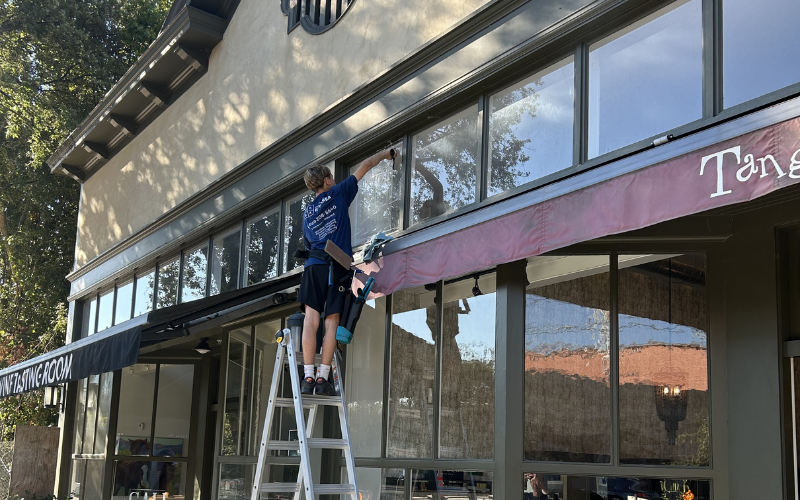
An annual exterior maintenance plan helps commercial properties stay consistently clean by scheduling services like window cleaning, concrete cleaning, building washing, and solar panel cleaning before conditions become overdue. Instead of reacting to complaints or visible buildup, property managers can plan these services seasonally based on traffic, exposure, visibility, and operational needs. This improves curb appeal, tenant and visitor experience, service coordination, and overall property presentation. In short, a structured maintenance plan makes exterior cleaning easier to manage, more consistent, and more valuable over the long term.
Commercial solar panel cleaning should be part of property maintenance planning because dust, pollen, residue, and bird droppings can reduce panel efficiency and make the system look neglected. For Bay Area property managers, it is both a performance issue and a presentation issue, especially on commercial buildings where solar is a visible asset. Professional cleaning also matters because commercial arrays often require safe rooftop or elevated access, proper coordination, and surface-appropriate methods. In short, treating solar cleaning as planned maintenance helps protect energy output, property appearance, and long-term asset value.

Bay Area property managers should view pressure washing as both a cleaning service and a compliance consideration, since wash water can carry contaminants into storm drains if not managed properly. The key is working with vendors who understand runoff concerns, assess site conditions, and adjust their process for areas like dumpster pads, garages, loading zones, and storefront walkways. Responsible pressure washing also supports curb appeal, tenant experience, safety, and overall property presentation. In short, commercial decision-makers should ask better questions about water handling and choose contractors who approach exterior cleaning with professionalism and site awareness.

Hard water stains usually come from repeated sprinkler overspray, hose rinsing that air-dries on glass, and dirty frames or screens that create drip lines. If you don’t remove them early, minerals can bake on and etch the glass, making normal window cleaning less effective and restoration more involved.
The best time to clean windows in California depends on your goal, but spring and early fall are the most reliable choices for impact, longevity, and value. Rain usually doesn’t ruin clean windows; it mostly reveals residue on glass, screens, and frames, which is why professional cleaning that includes the details lasts longer.
Solar output in California changes for many reasons, and cleaning only helps when soiling is actually blocking light on the panels. Use a clear-day monitoring check and a quick visual inspection from the ground to decide whether you need professional solar panel cleaning or a solar system inspection instead.
This checklist breaks down 11 common exterior cleaning mistakes that lead to streaks, damage, and stains that keep coming back. It explains why each mistake happens, what to do instead, and how small choices like pressure, timing, and stain identification can protect your home’s surfaces and save you from repeat work.
Spring is the best time to reset your home’s exterior because mild weather helps cleaning work better and it clears winter grime before outdoor season. A professional approach combines the right washing method for each surface with detailed window, screen, and solar cleaning for the biggest curb appeal upgrade without damage.
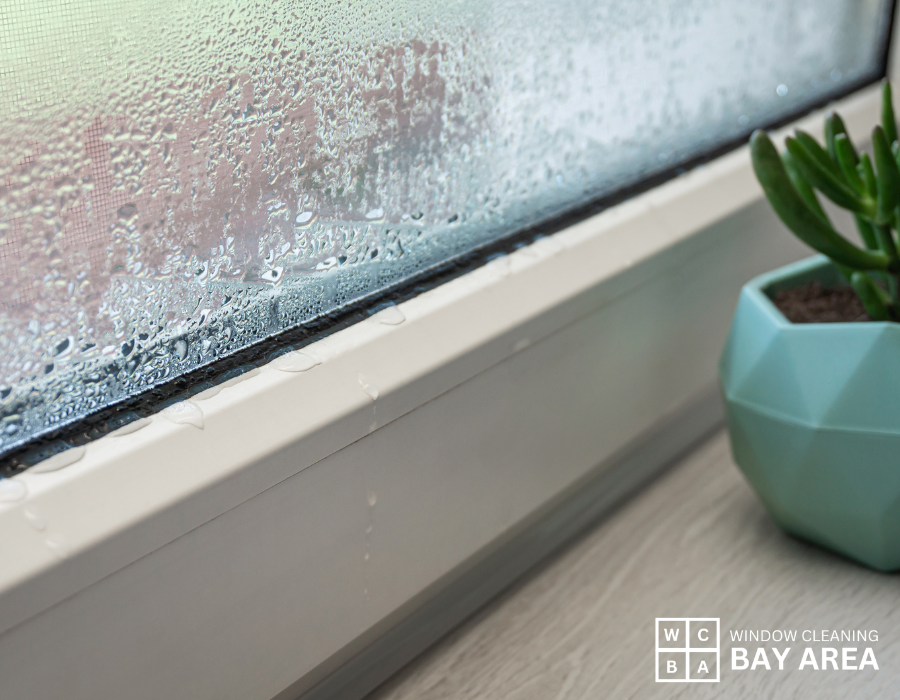
Condensation or fogging between window panes usually means the seal on a double-pane insulated glass unit has failed, allowing moisture into the space where it can’t be cleaned from either side.