What federal OSHA and California Title 8 require building owners to provide about roof anchorages before rope descent work begins.

Before A Rope Descent System Is Used, OSHA Requires The Owner To State In Writing That Every Anchorage Is Identified, Tested, Certified And Maintained To Hold 5,000 Lb. This Paper Explains Annual Inspection, 10-Year Certification And California's Anchor Rules.
Download PDFExecutive Summary
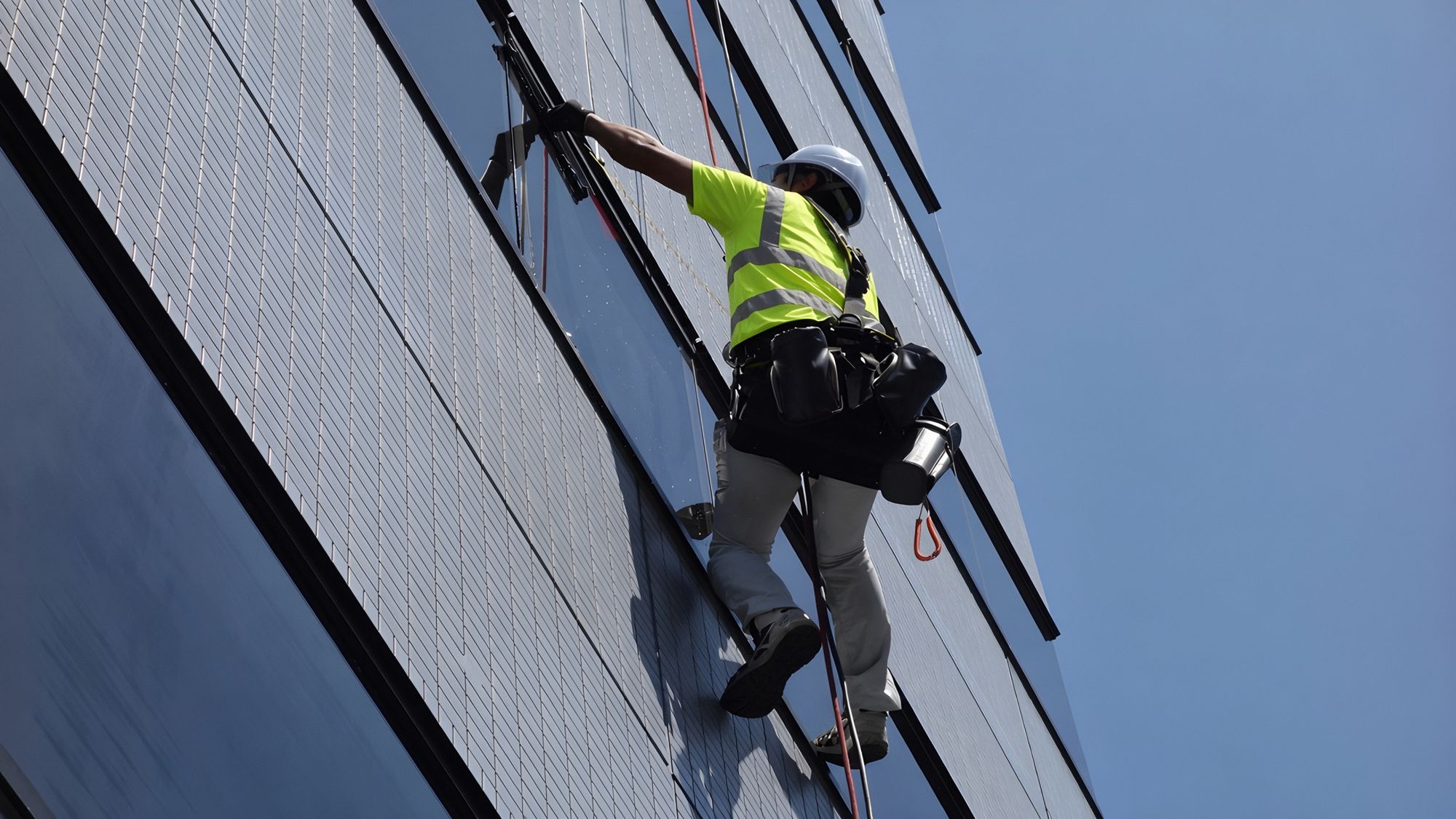
Before any rope descent system (RDS) is used on a building, federal OSHA requires the building owner to tell the employer in writing that every anchorage has been identified, tested, certified and maintained to hold 5,000 lb. This paper explains that rule in 29 CFR 1910.27(b)(1), the difference between the annual inspection and the 10-year certification, and the California Title 8 anchor rules that sit on top of it.
Key Points
- Written Owner Statement First: No RDS may be used until the owner informs the employer in writing about every anchorage. 1910.27(b)(1)(i)
- 5,000 Lb Per Employee: Each anchorage must support at least 5,000 lb in any direction for each employee attached. 1910.27(b)(1)(i)
- Annual Inspection: The statement must be based on an annual inspection by a qualified person. 1910.27(b)(1)(i)
- Certification At Least Every 10 Years: Each anchorage must be certified by a qualified person as necessary, and at least every 10 years. 1910.27(b)(1)(i)
- California Overlay: Only Division-approved anchors and fittings may be used, and they must be inspected at least every 12 months. T8 §3283
Federal RDS Rules (1910.27)
The rule reads: "Before any rope descent system is used, the building owner must inform the employer, in writing that the building owner has identified, tested, certified, and maintained each anchorage so it is capable of supporting at least 5,000 pounds (2,268 kg), in any direction, for each employee attached." 1910.27(b)(1)(i) The employer must not let any employee use an anchorage before getting that written information and must keep it for the duration of the job. 1910.27(b)(1)(ii)
5,000 Lb Anchor Requirement
The 5,000 lb figure appears throughout the federal rules. All RDS components except seat boards must sustain a minimum rated load of 5,000 lb. 1910.27(b)(2)(vii) Anchorages for personal fall protection systems must also support at least 5,000 lb, and each worker on an RDS must use a separate, independent personal fall arrest system. 1910.140(c)(13); 1910.27(b)(2)(vi)
Annual Inspection
The owner's written statement "must be based on an annual inspection by a qualified person." 1910.27(b)(1)(i) Separately, the employer must inspect the RDS itself at the start of each workshift it is used. 1910.27(b)(2)(iv)
10-Year Recertification
Certification of each anchorage by a qualified person is required "as necessary, and at least every 10 years." These requirements had to be implemented no later than November 20, 2017. 1910.27(b)(1)(i), (iii)
| Item | Inspection | Certification |
|---|---|---|
| Frequency | Annual | As necessary, at least every 10 years |
| Who | Qualified person | Qualified person |
| Purpose | Supports owner's written statement | Confirms 5,000 lb capacity per employee |
| Source | 1910.27(b)(1)(i) | 1910.27(b)(1)(i) |
Cal/OSHA Overlay
In California, Title 8 §3283 requires that "only those anchors and fittings granted approval by the Division shall be used," with anchors and fittings inspected at least every 12 months. §3283(b)(1), (e) Anchor placement is specified too, such as anchors located 42 to 51 inches above the sill. §3283(d)(1) Owners should satisfy both sets of rules: Division approval and 12-month inspection under Title 8, plus the federal written statement, annual inspection and 10-year certification.
Owner Document Checklist
- Written Anchorage Statement: Give it to every employer before any RDS use.
- Annual Inspection Report: From a qualified person.
- Certification Records: Dated within the last 10 years.
- Division Approval Documentation: For the anchors and fittings.
At Window Cleaning Bay Area, rope descent work is performed by a vetted partner crew, not WCBA crews.
Sources
- 29 CFR 1910.27. ecfr.gov — 29 CFR 1910.27
- 29 CFR 1910.140. ecfr.gov — 29 CFR 1910.140
- Cal. Code Regs. Title 8 §3283. dir.ca.gov/title8/3283.html
This paper summarizes regulations and agency guidance for general information and is not legal advice. Requirements may change and vary by city; consult the current text, your local agency and qualified professionals.