The federal and California rules owners should understand before rope descent work starts on their tower.

Rope Descent Systems Are Common On Mid- And High-Rise Buildings. This Paper Summarizes The OSHA And Cal/OSHA Height Limits, Stabilization, Rescue Planning And Weather Rules Owners Should Understand Before Rope Work Starts.
Download PDFExecutive Summary
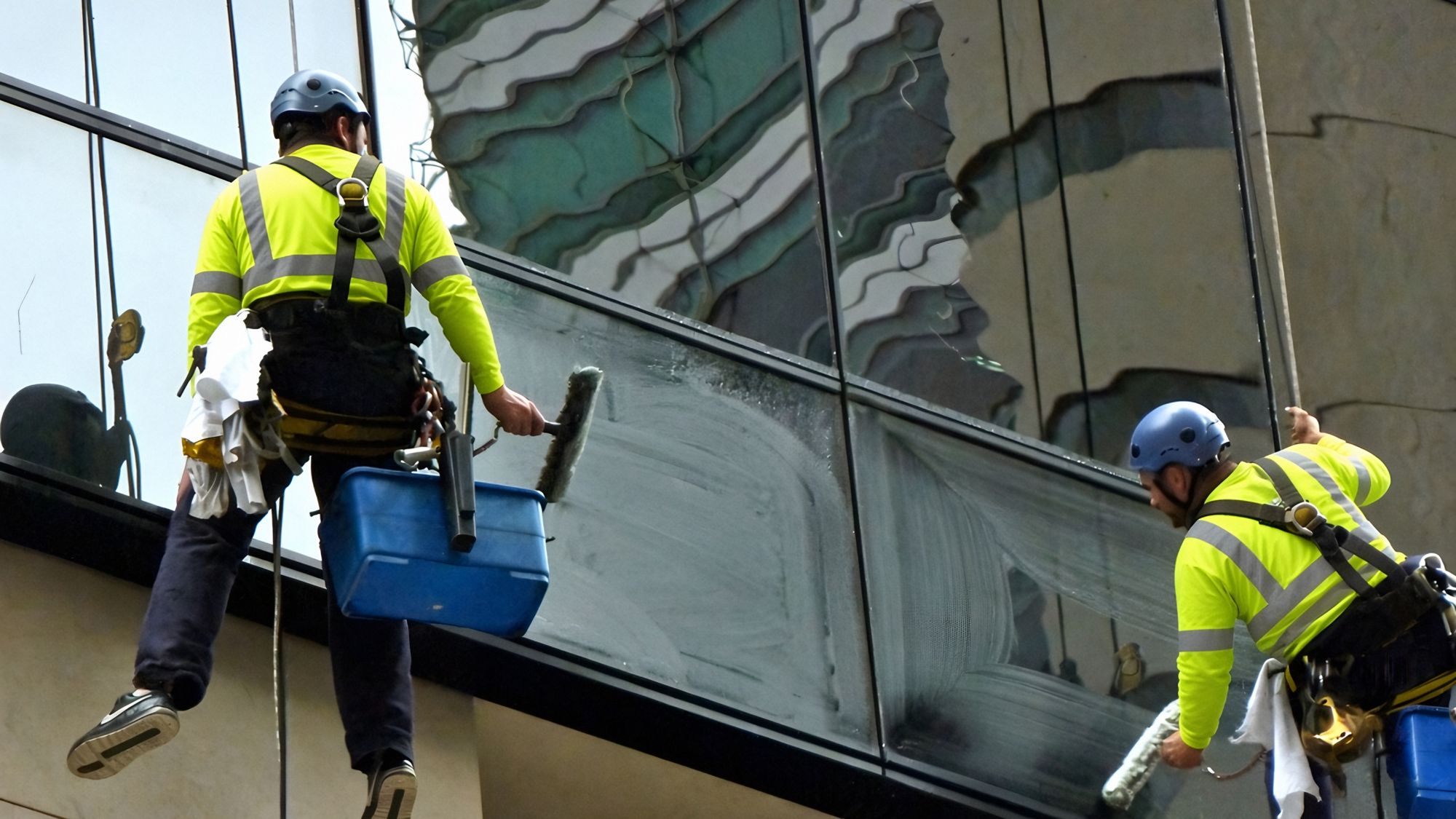
A rope descent system (RDS) lets a worker descend a facade on a seat board suspended from roof anchorages. It is common on mid- and high-rise buildings because it needs no permanent platform. Federal OSHA regulates RDS use in 29 CFR 1910.27(b), and California's §3295 sets limits for suspended equipment. This paper summarizes the height limits, stabilization, rescue planning and weather rules owners should understand before rope work starts on their tower.
Key Points
- 300 Ft Limit: No RDS above 300 ft above grade unless other access is infeasible or more hazardous. 1910.27(b)(2)(i)
- Stabilization Over 130 Ft: Required at the work location for descents greater than 130 ft. 1910.27(b)(2)(x)
- Prompt Rescue: The employer must provide prompt rescue of each employee in the event of a fall. 1910.27(b)(2)(viii)
- Weather: No RDS use in storms or gusty or excessive wind. 1910.27(b)(2)(xi)
- Partner Crew: At WCBA, rope descent work is performed by a vetted partner crew, never by WCBA crews.
What An RDS Is
Federal rules treat an RDS as suspended equipment that must be used according to the manufacturer's instructions, warnings and design limits, or under a qualified person's direction. Each user must be trained under §1910.30 and must wear a separate, independent personal fall arrest system. All components except the seat board must sustain 5,000 lb, and the seat board must support a 300 lb live load. 1910.27(b)(2)(ii), (iii), (vi), (vii) Anchorages need the owner's written certification first (see H2). 1910.27(b)(1)
300 Ft Limit
The employer must ensure "no rope descent system is used for heights greater than 300 feet (91 m) above grade unless the employer demonstrates that it is not feasible to access such heights by any other means or that those means pose a greater hazard." 1910.27(b)(2)(i) Above that height, building maintenance units or other powered platforms are the usual alternatives to consider (see H4).
Stabilization Over 130 Ft
"Stabilization is provided at the specific work location when descents are greater than 130 feet (39.6 m)." 1910.27(b)(2)(x) In California, §3295 also limits portable outriggers on ground-rigged working platforms to a suspension point no more than 130 ft above a safe surface unless acceptable to the Division. T8 §3295
Other Use Rules
- Per-Shift Inspection: The RDS is inspected at the start of each shift, and damaged gear is removed. (b)(2)(iv)
- Rigging And Tiebacks: Especially with counterweights or cornice hooks. (b)(2)(v)
- Rope Protection: Ropes are padded at edges and kept from flames, hot work and corrosives. (b)(2)(ix), (xiii)
- Tool Lanyards: Squeegees and buckets are secured against falling. (b)(2)(xii)
Rescue Planning
The rule requires "prompt rescue of each employee" after a fall but does not prescribe a method. 1910.27(b)(2)(viii) Owners should ask the rope crew how a suspended worker would be reached, and make sure roof access and building contacts are available during work.
RDS Requirements Summary
| Requirement | Rule | Source |
|---|---|---|
| Owner Anchorage Statement | 5,000 lb per employee, written, before use | 1910.27(b)(1) |
| Height Limit | 300 ft unless no feasible alternative | 1910.27(b)(2)(i) |
| Stabilization | Descents over 130 ft | 1910.27(b)(2)(x) |
| Fall Arrest | Separate, independent system | 1910.27(b)(2)(vi) |
| Weather | Not in storms or gusty or excessive wind | 1910.27(b)(2)(xi) |
| Outriggers (CA) | 130 ft unless Division accepts | T8 §3295 |
How The Vetted Partner Crew Works
Window Cleaning Bay Area coordinates rope descent jobs through a vetted partner crew that is trained and equipped for suspended work. WCBA crews handle ground, ladder and pole work. Owners should expect to provide anchorage documentation before the partner crew rigs.
Sources
- 29 CFR 1910.27. ecfr.gov — 29 CFR 1910.27
- Cal. Code Regs. Title 8 §3295. dir.ca.gov/title8/3295.html
This paper summarizes regulations and agency guidance for general information and is not legal advice. Requirements may change and vary by city; consult the current text, your local agency and qualified professionals.
Photo: Adapted from “Window Cleaners” by David Edwards, CC BY 3.0, via Wikimedia Commons; AI-edited and cropped.