
A guide to the areas commercial pressure washing covers, from sidewalks and entries to trash enclosures and parking, and the Bay Area stormwater rules that apply.
Commercial pressure washing covers far more than a quick rinse of the front walk. On a typical Bay Area office park, retail center, or apartment community, the hard surfaces that need regular cleaning include sidewalks, entry plazas, trash enclosures, parking areas, loading zones, and the building exterior itself. Each one gets dirty for different reasons and calls for a slightly different approach.
This guide walks through the main areas a commercial pressure washing program usually covers, what each one involves, and what property managers should plan for before work starts, including the stormwater rules that apply to every wash in the Bay Area.
What Commercial Pressure Washing Includes
At Window Cleaning Bay Area, our commercial pressure washing work focuses on the hard surfaces tenants, customers, and visitors actually see and walk on:
- Sidewalks and Walkways: Gum, foot-traffic staining, spilled drinks, and leaf and tree debris along main paths and building perimeters.
- Entries and Entry Plazas: Door approaches, covered entries, and plazas where first impressions form.
- Trash Enclosures and Dumpster Pads: Grease, food waste, and liquid residue that causes odors and staining.
- Parking Areas: Oil drips, tire marks, stairwells, and high-traffic drive lanes.
- Building Exteriors: Dirt, cobwebs, and buildup on walls, columns, and overhangs, often handled as a separate building wash.

Sidewalks and Walkways
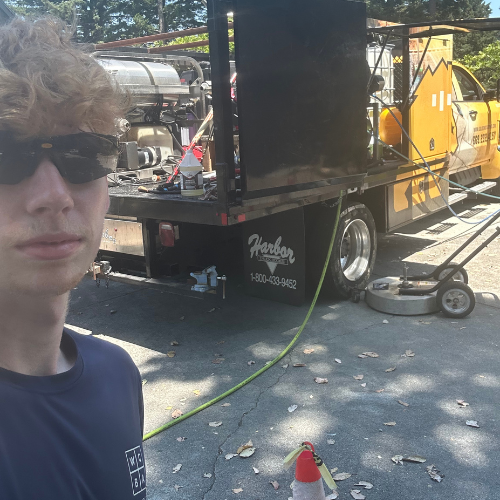
Walkways take the most wear on most commercial sites. Concrete is porous, so dirt, oils, and organic staining settle into the surface over time instead of sitting on top of it. A surface cleaner, a rotating attachment that keeps the spray a consistent distance from the concrete, produces an even result without the striping a hand wand can leave on large flat areas.
Shaded paths deserve extra attention. North-facing walkways and areas under mature trees can grow algae and moss during the wet months, which darkens the concrete and can make it slippery. Many properties schedule a walkway wash at the end of the rainy season for that reason.
Entries and Entry Plazas
Entries are where people form their first impression of a property. Door thresholds, mats, planters, and seating areas trap dirt, and covered entries never get rinsed by rain. Because entries also have the most foot traffic, timing matters. Most commercial properties schedule entry work early in the morning or on weekends so the surface is dry before tenants and customers arrive.
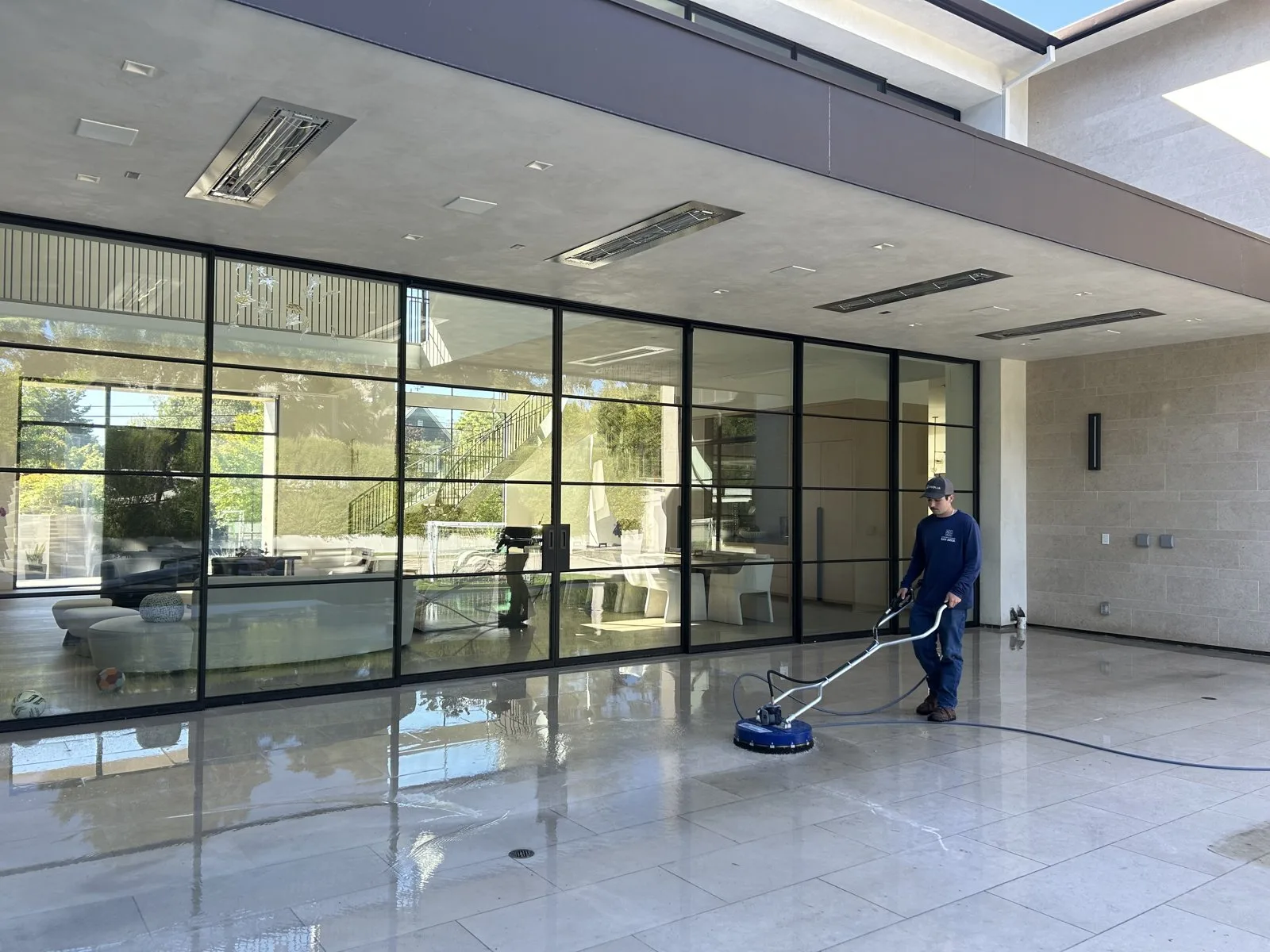
Glass doors and storefront windows sit right next to the entry surface. When both services are on the schedule, washing hard surfaces after window cleaning removes any drips from the glass work.
Trash Enclosures and Dumpster Pads
Trash enclosures are one of the most overlooked parts of a commercial property and one of the quickest to cause complaints. Food waste, grease, and leaking bags create odors, attract pests, and stain the concrete. Enclosures also need the most careful wash water handling, because grease and food residue must never be rinsed toward a storm drain.
Parking Areas and Loading Zones
Parking areas collect oil drips, tire marks, and leaf litter, while loading zones and drive lanes see vehicle fluids and debris. These areas tend to sit closest to storm drain inlets, so dry cleanup first, drain protection, and wash water collection are standard parts of a responsible process. Stained parking stalls are often spot-treated between full washes.
Building Exteriors
Walls, columns, overhangs, and soffits collect dirt and cobwebs that hard surface cleaning doesn't reach. Building exteriors are usually washed with lower pressure than concrete because painted surfaces, sealants, and window frames can be damaged by high pressure. That lower-pressure work is usually called building washing.
Stormwater Rules for Commercial Pressure Washing
In most of the Bay Area, storm drains flow to local creeks and the Bay without treatment. Regional stormwater programs require that polluted wash water from sidewalk, plaza, parking, and trash area cleaning be kept out of storm drains. Bay Area stormwater agencies publish surface cleaning guidance covering drain protection, wash water collection, and proper disposal, usually to the sanitary sewer with permission or to landscaped areas where water can fully soak in.
For property managers, the practical takeaway is to ask every vendor how they identify drains, contain water, and handle grease-heavy areas before work begins. Our white paper on pressure washing stormwater runoff rules in the Bay Area covers the requirements in detail.
How Often Commercial Surfaces Are Washed
There is no single schedule that fits every property. High-traffic entries and trash enclosures usually need the most frequent service, while parking areas and building walls are often washed once or twice a year. Our guide on building an exterior maintenance plan for a commercial property shows how to group these areas into a predictable calendar.
Where We Provide Commercial Pressure Washing
We provide commercial pressure washing across the Peninsula and South Bay, including Atherton, Los Altos, Los Gatos, Menlo Park, Mountain View, Palo Alto, San Jose, Saratoga, and Woodside. One recent example is a San Jose office building where we handled a building wash and exterior window cleaning on the same project.
Frequently Asked Questions
What Does Commercial Pressure Washing Include?
It typically covers sidewalks, walkways, entries, trash enclosures, dumpster pads, parking areas, and building exteriors. The exact scope is set for each property based on how each area is used.
Can Pressure Washing Damage Concrete or Building Surfaces?
Too much pressure or the wrong technique can etch concrete, strip paint, or force water past window seals. Surface cleaners, appropriate pressure for each material, and lower-pressure methods on building walls reduce that risk.
Can the Work Be Done Outside Business Hours?
Yes. Early mornings and weekends are common so entries and walkways are dry and clear when people arrive.
Where Does the Wash Water Go?
In the Bay Area, wash water from commercial surfaces should be kept out of storm drains. Drains are protected and water is collected for proper disposal according to local stormwater guidance.
Sources and References