
Compare water-fed poles, traditional squeegees, lifts and rope access for Bay Area commercial window cleaning.
Key Takeaways
Water-fed poles suit many low- and mid-rise exteriors, traditional squeegees suit interiors and detail glass, lifts handle glass a pole cannot safely reach, and high-rise towers need rope access.
For most Bay Area offices, storefronts and apartment buildings up to mid-rise height, a water-fed pole system balances safety, speed and finish. The right method depends on height, glass type and access.
Methods Compared at a Glance
- Water-Fed Pole: Purified water for suitable low- and mid-rise exteriors; not for interiors.
- Traditional Squeegee: Interiors and reachable detail glass; ladder work may be needed at height.
- Lift or Boom: Glass a pole cannot reach, subject to lift range and site access.
- Rope Access: San Francisco and Oakland high-rise towers, handled by a vetted partner crew.
Water-Fed Pole
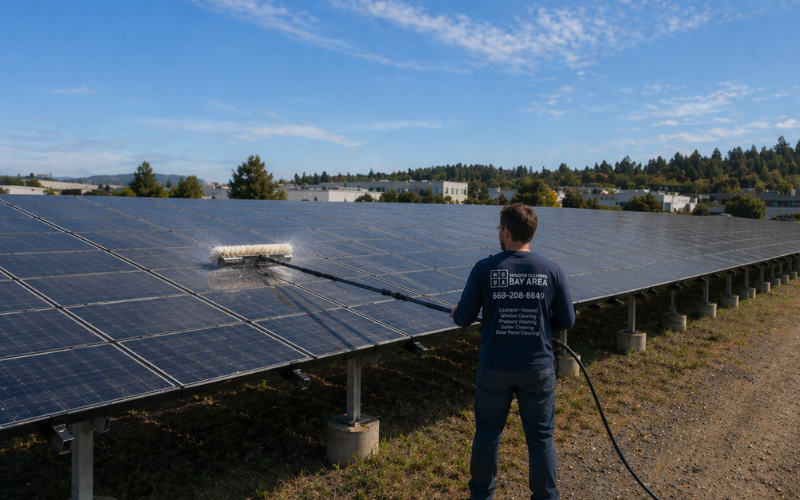
Purified water and a brush on an extension pole clean exterior glass from the ground, avoiding most ladder work. We used this method on a commercial office building in San Jose.
Traditional Squeegee
Hand work is the best choice for interior glass and detailed frames.
Lift Access
A lift reaches glass above pole range or over obstacles such as landscaping.
Rope Access
For high-rise towers in San Francisco and Oakland, rope access is handled by a vetted partner crew.
Our Take
Most low- and mid-rise Bay Area properties are best served by water-fed pole exteriors plus squeegee interiors on a recurring schedule.
Frequently Asked Questions
What Is the Best Way to Clean Commercial Windows?
For most low- and mid-rise buildings, use water-fed poles for exteriors and traditional squeegee work for interiors.
Are Water-Fed Poles Safe for All Glass?
They work on most exterior glass. Coated or specialty glass may need a different approach.
When Is Rope Access Needed?
When glass is too high for poles or lifts, usually on high-rise towers in San Francisco and Oakland.