How California's §3295 and federal 1910.66 govern building maintenance units, davits and swing stages used for facade access.

Title 8 §3295, Powered Platform Installations—Equipment, Sets California Design Rules For BMUs, Davits And Swing Stages, While OSHA 1910.66 Covers Permanent Powered Platforms. This Paper Compares Both For Owners Planning Or Maintaining Access Equipment.
Download PDFExecutive Summary
Tall buildings are usually cleaned from suspended equipment: building maintenance units (BMUs) on roof carriages, davits that suspend a platform over the edge, or outrigger-rigged platforms often called swing stages. In California, Title 8 §3295 ("Powered Platform Installations—Equipment," in Article 6 of the General Industry Safety Orders) sets design rules for that equipment. Federal 29 CFR 1910.66 covers permanent powered platforms. This paper compares the two for owners planning or maintaining access equipment.
Key Points
- Engineer-Designed: California powered platform equipment must be designed by or under a California-registered professional engineer. T8 §3295(a)(1)
- Design Loads: 250 lb live load per occupant; designed for 100 mph wind out of service and 50 mph in service. §3295(a)(2)–(4)
- Davit Stability: Every davit installation must have a stability factor of at least four. §3295(c)(3)(A)
- Federal 12-Month Cycle: Building supports and equipment are inspected at intervals not exceeding 12 months, with owner certification records. 1910.66(g)(2)
- Owner Assurance: Owners of new installations must inform the employer in writing before each use. 1910.66(c)(1)
Access Equipment Types
§3295 lists the components of a powered platform installation: "platforms, stabilizing components, carriages, outriggers, davits, hoisting machines, wire ropes and electrical components." Elevated building maintenance equipment "shall be suspended by a carriage, outriggers, davits or an equivalent method." §3295(a), (c)
§3295 Requirements
General Design
Installations must be designed by or under a California-registered professional engineer experienced in such design. They must provide a 250 lb minimum live load per platform occupant and withstand winds of at least 100 mph at 30 ft above grade when out of service and 50 mph at all elevations when in service. Equipment may not be cascaded between levels by craning without prior Division approval. §3295(a)
Carriages
Powered carriages may not traverse faster than 50 ft per minute, need structural stops, and may not traverse until the suspended platform is at its uppermost position and clear of the facade. §3295(c)(1)
Davits And Outriggers
Davit installations need a stability factor against overturning of at least four, and roof-rigged davit access must be from a safe surface. §3295(c)(3) Portable outriggers for ground-rigged platforms are limited to a suspension point no more than 130 ft above a safe surface unless acceptable to the Division. §3295
Federal 1910.66 Powered Platforms
1910.66 covers "powered platform installations permanently dedicated to interior or exterior building maintenance," including window cleaning, but not temporary suspended scaffolds. 1910.66(a) Owners of new installations must give the employer written assurance before each use, and the building owner keeps certification records of the periodic inspections. 1910.66(c), (g)(2)(iii)
Equipment Comparison
| Equipment | Key Rule | Source |
|---|---|---|
| Roof Carriage / BMU | 50 ft/min max traverse; stops; platform up before traversing | §3295(c)(1) |
| Davits | Stability factor of at least 4 | §3295(c)(3) |
| Outrigger Platforms | 130 ft limit for portable outriggers unless Division accepts | §3295 |
| Angulated Roping Stabilization | Only where suspended portion is 130 ft or less above a safe surface | 1910.66 |
| All Permanent Installations | Inspected at intervals of 12 months or less | 1910.66(g)(2) |
Choosing Equipment
The choice depends on building height, roof layout and facade geometry, and in every case the system is engineered. Owners planning new towers should involve a facade access consultant early (see H7). Owners of existing systems should keep inspection and certification records current (see H8). At Window Cleaning Bay Area, suspended work is performed by a vetted partner crew, never WCBA crews.
Sources
- Cal. Code Regs. Title 8 §3295. dir.ca.gov/title8/3295.html
- 29 CFR 1910.66. ecfr.gov — 29 CFR 1910.66
This paper summarizes regulations and agency guidance for general information and is not legal advice. Requirements may change and vary by city; consult the current text, your local agency and qualified professionals.
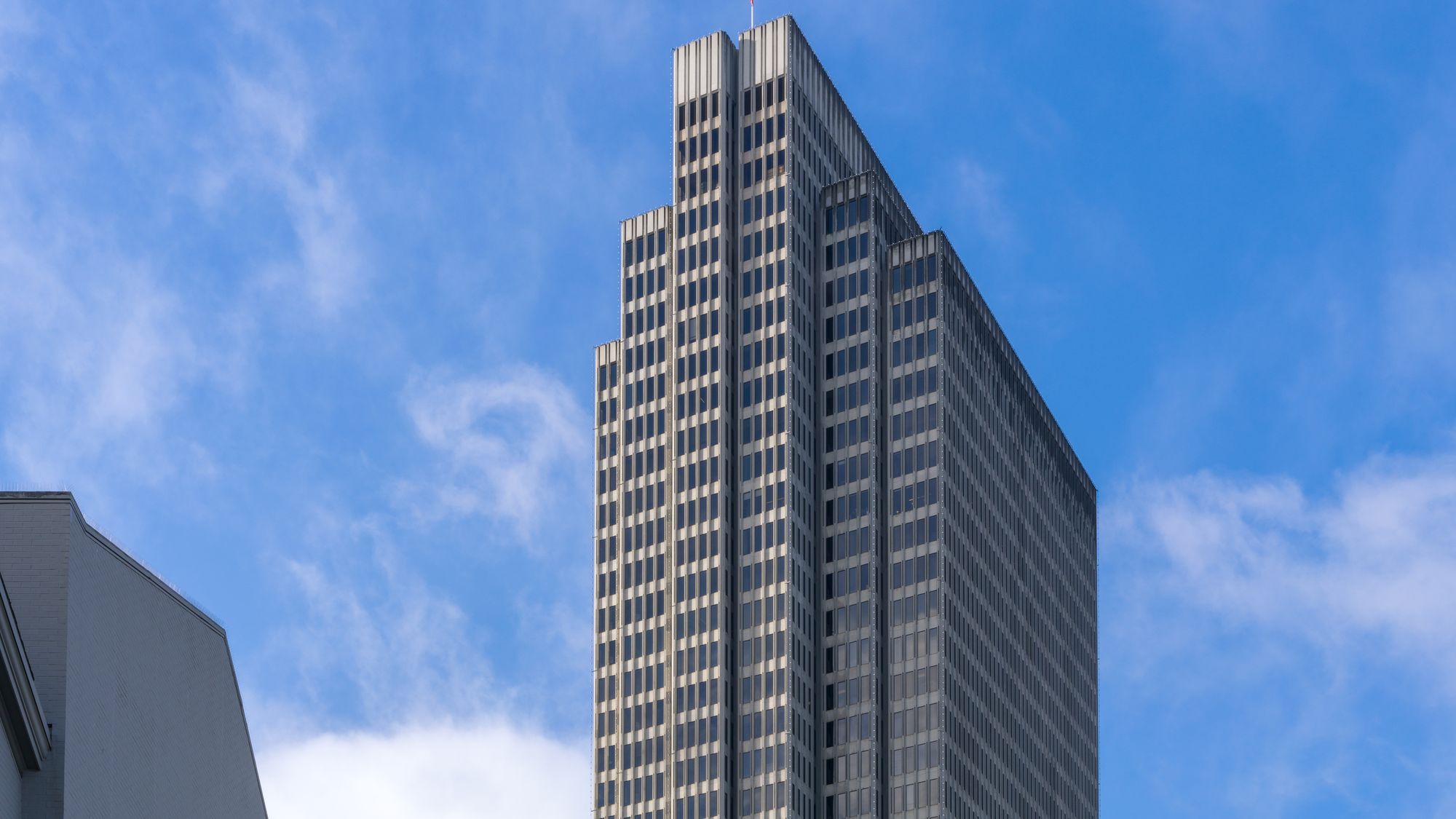
Photo: “Skyscrapers in San Francisco's Financial District, including One Embarcadero Center and others” by Dale Cruse, CC BY 2.0, via Wikimedia Commons; cropped.