
Bay Area property managers should view pressure washing as both a cleaning service and a compliance consideration, since wash water can carry contaminants into storm drains if not managed properly. The key is working with vendors who understand runoff concerns, assess site conditions, and adjust their process for areas like dumpster pads, garages, loading zones, and storefront walkways. Responsible pressure washing also supports curb appeal, tenant experience, safety, and overall property presentation. In short, commercial decision-makers should ask better questions about water handling and choose contractors who approach exterior cleaning with professionalism and site awareness.
Commercial properties in the Bay Area are expected to look clean, operate safely, and present well to tenants, customers, and visitors. Pressure washing plays a major role in that. Sidewalks, storefront entries, loading areas, dumpster pads, garages, and common exterior surfaces all collect dirt, staining, organic buildup, grease, gum, and debris over time. Left alone, those conditions can affect appearance, create slip concerns, and make a property feel neglected.
At the same time, exterior cleaning is not just about making a site look better. For commercial properties, it also raises an important operational question: how is the wash water being handled? That is where Bay Area pressure washing compliance becomes a real issue for property managers, facility teams, and building owners. Water runoff, pollutants entering storm drains, and a vendor’s process for responsible washing all matter.
For Bay Area property managers, the goal is not to become an environmental compliance expert overnight. It is to understand the basics, ask better questions, and work with vendors who take responsible washing practices seriously. When a pressure washing contractor understands water reclaim awareness, site conditions, and commercial coordination, the service becomes easier to manage and less risky for the property.
Why Water Runoff Matters On Commercial Properties
Pressure washing creates wastewater. Depending on the surface being cleaned, that water can carry dirt, sediment, grease, oils, cleaning agents, organic matter, and other contaminants away from the work area. On a commercial property, that can happen fast if the site includes sloped concrete, parking areas, curbs, loading zones, storefront walkways, or drains near the work zone.
For property managers, the concern is simple. Water that leaves the wash area does not just disappear. If runoff reaches a storm drain without being properly managed, that can create problems that go beyond appearance. It can reflect poorly on how the property is maintained, create concerns during vendor oversight, and expose a property team to avoidable headaches.
This is especially relevant in dense Bay Area commercial environments, where many properties have limited staging space, active pedestrian traffic, shared access points, tight storefront corridors, underground parking entries, and nearby storm drain inlets. Those conditions make it even more important for a cleaning vendor to think through runoff control before work begins.
Bay Area Pressure Washing Compliance Starts With Vendor Awareness
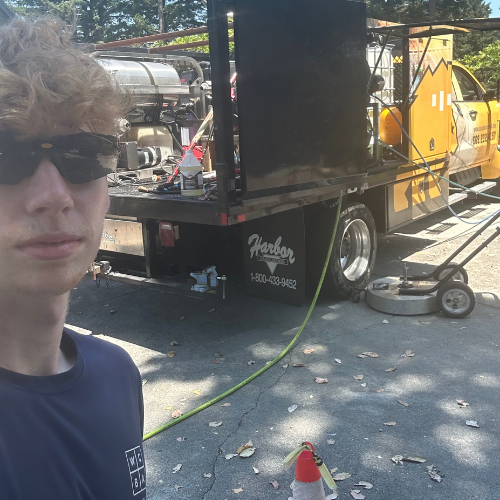
Not every pressure washing job has the same level of compliance sensitivity, but every commercial job should start with awareness. A responsible contractor should look at the site, identify where the water will go, understand the type of buildup being removed, and decide whether containment, reclaim, blocking, diversion, or modified cleaning methods are appropriate.
That matters because commercial pressure washing compliance is not just about showing up with a machine and cleaning a surface. It is about understanding the work area and using a process that fits the site. A sidewalk with light dust near no drains is different from a greasy dumpster enclosure, a parking garage with fluid staining, or a high-traffic retail frontage with multiple storm drain paths nearby.
Property managers do not need a long technical lecture from every vendor, but they should expect signs of professionalism. A contractor should be able to explain how they evaluate runoff, what steps they take to control wash water when needed, and how they approach more sensitive areas. If a vendor seems dismissive about runoff or has no clear process at all, that is worth noticing.
What Property Managers Should Ask Before Scheduling Pressure Washing
One of the best ways to reduce risk is to ask a few direct questions before service is approved. That does not mean creating a difficult procurement process for routine maintenance. It means confirming that the vendor understands responsible commercial work.
A property manager should feel comfortable asking how the company handles wash water, whether they assess drain locations before work begins, and what their process is for areas like dumpster pads, grease-prone loading zones, stained concrete, garages, or service corridors. These are normal questions for a commercial property, not unusual ones.
It is also reasonable to ask whether the contractor changes methods depending on the surface and site conditions. A good commercial vendor understands that exterior cleaning is rarely one-size-fits-all. Some areas may require more containment or more controlled cleaning than others. Some may need to be scheduled during low-traffic windows to reduce disruption and improve site control.
Just as important, property managers should ask how the contractor coordinates service. On a busy commercial property, compliance and coordination often go together. A poorly timed wash can spread water across active walkways, interfere with tenant access, or create unnecessary confusion around cones, blocked entries, or temporary closures. A well-run vendor plans the work so the site stays manageable while cleaning is performed.
Responsible Washing Practices Matter More Than Generic Promises
Many vendors will say they are careful. Fewer can explain what that actually means on a commercial property.
Responsible washing practices usually begin with understanding the surface, the surrounding drains, the type of contamination present, and the amount of water likely to be generated. From there, a professional vendor can determine whether the area requires stronger runoff controls, a reclaim-oriented setup, modified pressure washing methods, or more deliberate staging and containment.
For property managers, that practical thinking is more valuable than broad promises. You want a contractor who can look at a dumpster pad and recognize that grease and wastewater management are part of the job. You want someone who sees a sloped storefront entry and thinks about pedestrian flow, runoff direction, and customer-facing presentation. You want a team that treats a parking garage differently from a sidewalk or courtyard because the site conditions are different.
This is where experience in commercial exterior cleaning makes a difference. Vendors who regularly work on business parks, retail centers, mixed-use properties, office buildings, and other managed sites tend to understand that the cleaning itself is only part of the service. The other part is protecting the property’s operations while the work is being completed.
Water Reclaim Awareness Is Part Of Professional Commercial Service
Water reclaim pressure washing in the Bay Area is often discussed as a technical issue, but for property managers, it is really a vendor quality issue. It shows whether a contractor is thinking beyond surface-level cleaning.
Water reclaim awareness means the vendor is paying attention to where wash water goes, what may be in it, and what type of controls may be needed based on the area being cleaned. That awareness is particularly important on commercial properties where wastewater may contain more than just dust or mud. High-use walkways, food-adjacent zones, trash enclosures, service alleys, parking decks, and drive lanes can all create more sensitive cleaning conditions.
A contractor does not need to oversell this. In fact, overcomplicating the conversation can make it less useful. What matters is whether the company has a responsible process and whether they adapt it to the site. For property managers, that is the practical standard. You want to know the vendor is thinking clearly, assessing the property correctly, and approaching the job with commercial discipline.
Compliance Is Also About Protecting The Property Experience
Property managers are not only managing surfaces. They are managing an environment.
When exterior cleaning is handled poorly, the problem is not limited to runoff. The property can also feel disorganized during service. Water may spread into active pedestrian zones. Storefront access may become awkward. Tenants may notice inconsistent communication. Visitors may encounter a work area that feels improvised instead of controlled.
That is why commercial pressure washing compliance should be viewed as part of broader site management. A vendor who plans carefully is more likely to protect tenant experience, maintain a cleaner work zone, and reduce the chance of complaints during service. That matters for retail properties, office campuses, mixed-use developments, industrial properties, and managed commercial assets where appearance and day-to-day usability both matter.
In the Bay Area, where many commercial properties compete on presentation and professionalism, exterior cleaning should support the property’s image, not interrupt it. Clean concrete, maintained storefronts, and well-kept common areas send a message about standards. But those results are strongest when the work is done in a way that also respects safety, access, and site control.
Common Commercial Areas Where Process Really Matters
Some cleaning areas naturally require more attention than others. Dumpster pads are an obvious example because they often involve grease, residue, odor-causing buildup, and more concentrated wastewater concerns. Parking garages and loading zones can also require more deliberate handling because of vehicle-related residue, confined areas, drainage points, and traffic coordination.
Storefront walkways and customer-facing entries present a different challenge. These areas may be highly visible and less contaminated than a service yard, but they often need tighter timing, cleaner presentation during work, and stronger pedestrian coordination. Even a relatively straightforward concrete cleaning job can become disruptive if it is not staged well.
Business parks and office properties bring another layer. These sites often have broader common areas, multiple drain locations, and more coordination needs between vendors, tenants, and on-site teams. In these environments, a commercial cleaning contractor should not only know how to clean the property, but also how to move through it professionally.
How Pressure Washing Fits Into Long-Term Property Maintenance
Pressure washing is often treated as a reactive service. A property gets visibly dirty, complaints start coming in, and a manager schedules a cleaning. That approach works sometimes, but it is not always the most efficient.
On many commercial properties, exterior cleaning is better when it is planned. Regular service intervals can help prevent heavy buildup, support a more consistent property appearance, and reduce the need for more aggressive cleaning later. That can make service easier to coordinate and simpler to manage over time.
For Bay Area property managers, this matters because exterior presentation is closely tied to overall maintenance standards. Clean storefronts, brighter walkways, maintained common areas, and better-looking approaches to the building all contribute to how a property is perceived. They also help reinforce that the site is actively managed.
When a vendor understands both maintenance planning and commercial pressure washing compliance, the service becomes more valuable. It is no longer just a one-time wash. It becomes part of a broader property upkeep strategy that supports appearance, safety, and operational consistency.
Choosing A Bay Area Commercial Pressure Washing Vendor
A strong vendor relationship usually comes down to more than price. Property managers need a contractor who is responsive, professional on site, aware of runoff concerns, and capable of working within the realities of an active commercial property.
That includes showing up prepared, communicating clearly, managing the service area responsibly, and understanding that different surfaces and conditions require different approaches. It also includes basic commercial expectations like reliability, site coordination, professionalism, and an awareness of worker safety and property operations.
For Bay Area properties, local familiarity matters too. Commercial sites here often involve tighter layouts, stricter expectations, more visible public-facing conditions, and greater sensitivity around how work is performed. A contractor who understands that environment is better positioned to deliver results without creating unnecessary friction for property teams.
Window Cleaning Bay Area works with commercial clients that need more than a surface-level wash. For properties that require pressure washing, concrete cleaning, storefront cleaning, building washing, or related exterior maintenance, the job should be approached with professionalism, planning, and awareness of how the service affects the site as a whole.
Final Thoughts On Bay Area Pressure Washing Compliance
Bay Area pressure washing compliance is not just a technical issue for vendors. It is a practical concern for property managers who want their sites maintained responsibly. Water runoff, wash water handling, site coordination, and vendor process all matter when pressure washing is performed on commercial properties.
The best results come from working with a contractor who understands that compliance awareness is part of professional service. Clean surfaces are important, but so is the way the work is done. A well-managed cleaning project can improve curb appeal, support tenant and customer experience, and help maintain property standards without creating avoidable issues during service.
If you manage a commercial property in the Bay Area and want a pressure washing vendor that understands professional site coordination, responsible washing practices, and the needs of active properties, Window Cleaning Bay Area can help. Reach out to discuss one-time service or an ongoing exterior maintenance plan for your storefronts, walkways, garages, dumpster areas, and other commercial surfaces.