A simple method for estimating whether commercial solar panel cleaning pays for itself, what changes the return, and how to set a cleaning schedule.
For a business with a rooftop or carport solar array, panel cleaning is a maintenance expense like any other. The question is whether it pays for itself. The honest answer is that it depends on how dirty the panels get, how much energy the system produces, and what that energy is worth to the business. This guide lays out a simple method Bay Area businesses can use to estimate the return on commercial solar panel cleaning using their own numbers.
Why Solar Panels Lose Output When They Get Dirty
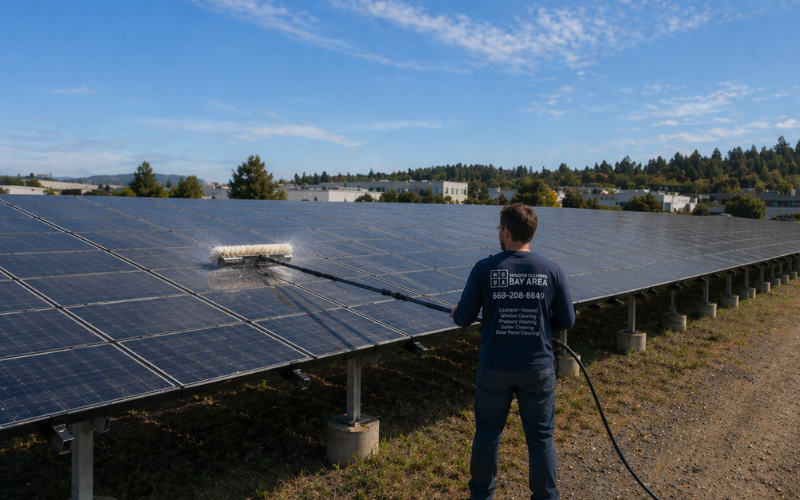
Dust, pollen, bird droppings, leaf litter, and ash on the glass block some of the sunlight from reaching the cells. Researchers call this soiling. How much output is lost varies widely by location, panel tilt, nearby sources of dust, and how long it has been since the last rain or cleaning. Low-tilt commercial roofs and carports tend to hold more dirt than steeply tilted residential panels, because rain runs off flat glass less effectively.
The Bay Area adds a specific factor: long dry seasons. Months without meaningful rain let dirt accumulate from late spring into fall, and wildfire smoke and ash can add to it. Our white paper on solar soiling losses and cleaning frequency goes deeper into the research.
The Basic ROI Formula
The return on a cleaning comes down to one comparison: the value of the energy recovered versus the cost of the cleaning.
- Find Annual Production: Pull the system's annual kilowatt-hour production from the inverter or monitoring platform.
- Estimate the Soiling Loss: Compare production before and after a cleaning, or compare a dirty period to the same period in a prior year with similar weather.
- Value the Lost Energy: Multiply the lost kilowatt-hours by what that energy is worth to the business under its utility rate or power purchase agreement.
- Compare to the Cleaning Cost: If the recovered value over the period between cleanings is greater than the cost of cleaning, the cleaning pays for itself.
An Illustrative Example
The numbers below are hypothetical and only show how the math works. They are not measurements from any specific system.
Suppose a system produces 200,000 kWh per year, soiling reduces output by an assumed 5 percent over the dry season, and energy is valued at an assumed $0.30 per kWh. The lost energy would be 10,000 kWh, worth $3,000. If cleaning recovers most of that loss and costs less than the recovered value, the cleaning has a positive return. If the loss on your system is much smaller, the math may favor cleaning less often.
Our solar cleaning calculator lets you run your own numbers.
What Changes the Return
- System Size: Larger arrays recover more energy per cleaning, while setup costs are spread across more panels.
- Panel Tilt: Flat and low-tilt arrays hold more dirt than steeply tilted panels.
- Local Dust Sources: Nearby freeways, construction, agriculture, trees, and birds all increase soiling.
- Energy Value: The higher the value of each kilowatt-hour under your rate plan or agreement, the more each recovered kilowatt-hour is worth.
- Timing: A cleaning after a long dry stretch, while days are still long and sunny, tends to recover more than a cleaning right after heavy rain.
Warranty and Equipment Considerations
Return on cleaning isn't only about energy. Many panel manufacturers publish cleaning guidance in their installation manuals and warranty terms, including limits on pressure, water quality, brushes, and chemicals. Using the wrong method can scratch the glass or damage coatings. Our white paper on solar panel cleaning warranty requirements explains what to look for.
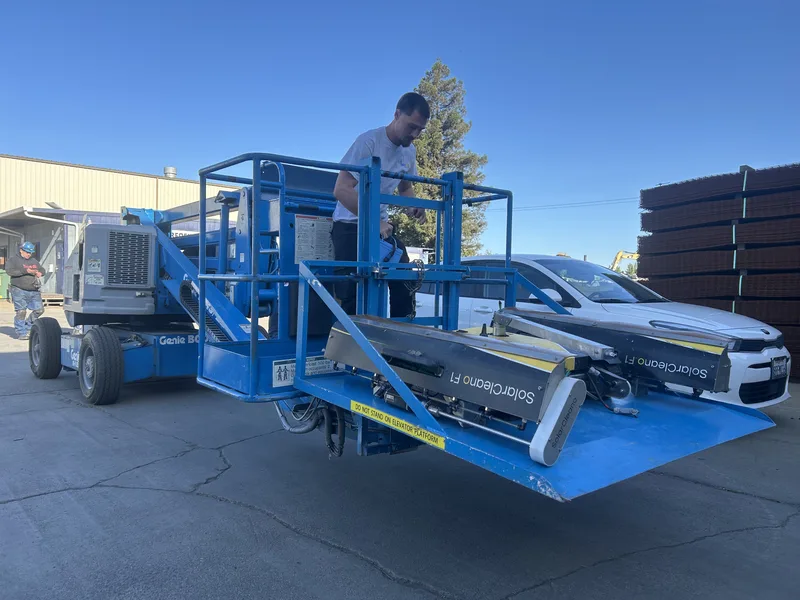
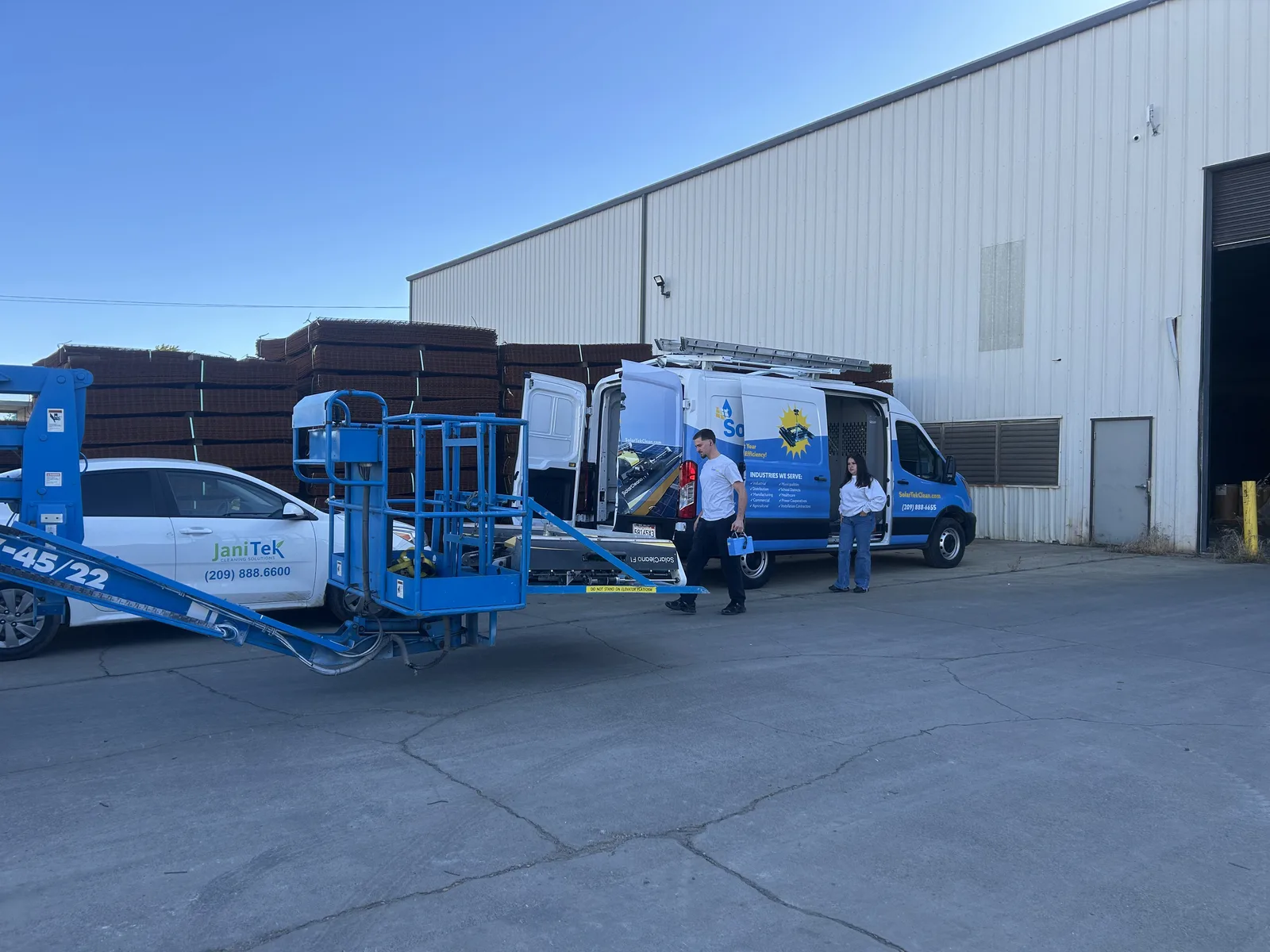
Our team uses non-abrasive methods on commercial arrays, including a solar cleaning robot suited to large rooftop systems. You can learn more about our commercial solar panel cleaning service.
How to Decide on a Cleaning Schedule
- Track Production: Watch monitoring data for gradual declines that aren't explained by weather or season.
- Clean Once and Measure: Compare production in the weeks before and after a cleaning to estimate your actual soiling loss.
- Set a Baseline Frequency: Use that measured loss and your energy value to decide whether one, two, or more cleanings per year make sense.
- Adjust After Events: Add a cleaning after wildfire smoke, nearby construction, or heavy bird activity.
For property managers responsible for several sites, our earlier guide to commercial solar panel cleaning for property managers covers access, scheduling, and coordination.
Sources and References
Frequently Asked Questions
What Is Soiling on Solar Panels?
Soiling is the dust, pollen, bird droppings, leaf litter and ash that collect on the glass and block some sunlight from reaching the cells.
How Do You Calculate the Return on a Commercial Solar Cleaning?
Find annual production, estimate the soiling loss, value the lost energy under your utility rate or power purchase agreement, and compare it with the cleaning cost. If the recovered value between cleanings is greater than the cost, the cleaning pays for itself.
Why Do Flat Commercial Arrays Hold More Dirt Than Residential Panels?
Low-tilt commercial roofs and carports shed rain less effectively than steeply tilted residential panels, so dirt tends to stay on the glass longer.
How Can a Business Measure Its Own Soiling Loss?
Compare production in the weeks before and after a cleaning, or compare a dirty period with the same period in a prior year that had similar weather.
What Events Call for an Extra Cleaning Between Scheduled Visits?
Wildfire smoke, nearby construction and heavy bird activity can all add soiling, so a cleaning after one of these events may be worth adding to the baseline schedule.