What federal and California rules actually say about wind limits for powered platforms and rope descent systems.

Federal Rules Set One Firm Wind Number, 25 Mph, For Permanent Powered Platforms, And Only A Qualitative Standard For Rope Descent Systems. This Paper Lays Out What OSHA And Cal/OSHA §3295 Actually Say About Wind.
Download PDFExecutive Summary
Wind is the most common reason high-rise window cleaning is postponed. Owners often ask what wind speed is "too windy." The answer depends on the equipment. Federal rules set one firm number, 25 mph, for permanent powered platforms. For rope descent systems they set a qualitative standard with no number. California's §3295 sets wind design loads, not operating limits. This paper lays out exactly what the rule text says, using only the wind numbers that appear in it.
Key Points
- Powered Platforms, 25 Mph: A platform shall not be operated in winds over 25 mph, except to move it to storage. 1910.66(i)(2)(v)
- Anemometer Required: Exterior powered platforms need an anemometer mounted on the platform. 1910.66(i)(2)(vi)
- Rope Descent, No Number: No RDS use when "storms or gusty or excessive wind" are present. 1910.27(b)(2)(xi)
- Design Loads Are Not Work Limits: §3295 requires equipment designed for 100 mph out of service and 50 mph in service. T8 §3295(a)(3)–(4)
- Manufacturer Limits Apply: An RDS must be used within the manufacturer's instructions and design limits. 1910.27(b)(2)(ii)
What Regulations Say About Weather
Permanent Powered Platforms
"The platform shall not be operated in winds in excess of 25 miles per hour (40.2 km/hr) except to move it from an operating to a storage position. Wind speed shall be determined based on the best available information, which includes on-site anemometer readings and local weather forecasts." 1910.66(i)(2)(v) On exterior installations, an anemometer (it may be a portable unit mounted temporarily) must be on the platform before and during use. 1910.66(i)(2)(vi)
Rope Descent Systems
The employer must ensure "no employee uses a rope descent system when hazardous weather conditions, such as storms or gusty or excessive wind, are present." 1910.27(b)(2)(xi) The rule gives no wind speed, so the decision rests with the crew's qualified person, the equipment limits and conditions on site. Stabilization is also required for descents over 130 ft. 1910.27(b)(2)(x)
California Design Loads
Title 8 §3295 requires powered platform equipment exposed to wind when not in service to withstand winds of at least 100 mph at 30 ft above grade, and equipment exposed to wind in service to withstand at least 50 mph at all elevations. §3295(a)(3)–(4) These figures set how strong the equipment must be. They do not say it may be operated in 50 mph wind.
Equipment Manufacturer Limits
An RDS must be used "in accordance with instructions, warnings, and design limitations set by the manufacturer or under the direction of a qualified person." 1910.27(b)(2)(ii) If a manufacturer publishes a lower wind limit than the regulation, the lower limit governs in practice. This paper does not cite any manufacturer's specific number.
Weather Factors
| Equipment | Wind Rule | Source |
|---|---|---|
| Permanent Powered Platform | No operation over 25 mph except moving to storage | 1910.66(i)(2)(v) |
| Exterior Powered Platform | Anemometer on platform | 1910.66(i)(2)(vi) |
| Rope Descent System | Not in storms or gusty or excessive wind | 1910.27(b)(2)(xi) |
| All RDS | Manufacturer limits | 1910.27(b)(2)(ii) |
| CA Powered Platform Equipment | Designed for 100 mph out of service / 50 mph in service | §3295(a) |
Bay Area Wind Patterns And Why Jobs Get Rescheduled
Wind at roof level and along a facade can differ from what is felt at the street. Because the RDS rule is qualitative and platform rules call for on-site readings, a crew may stop or postpone work even when the street feels calm. Owners can help by allowing flexible scheduling, such as morning starts and backup dates. On WCBA jobs, rope and suspended work is performed by a vetted partner crew that makes these weather calls on site.
Sources
- 29 CFR 1910.66. ecfr.gov — 29 CFR 1910.66
- 29 CFR 1910.27. ecfr.gov — 29 CFR 1910.27
- Cal. Code Regs. Title 8 §3295. dir.ca.gov/title8/3295.html
This paper summarizes regulations and agency guidance for general information and is not legal advice. Requirements may change and vary by city; consult the current text, your local agency and qualified professionals.
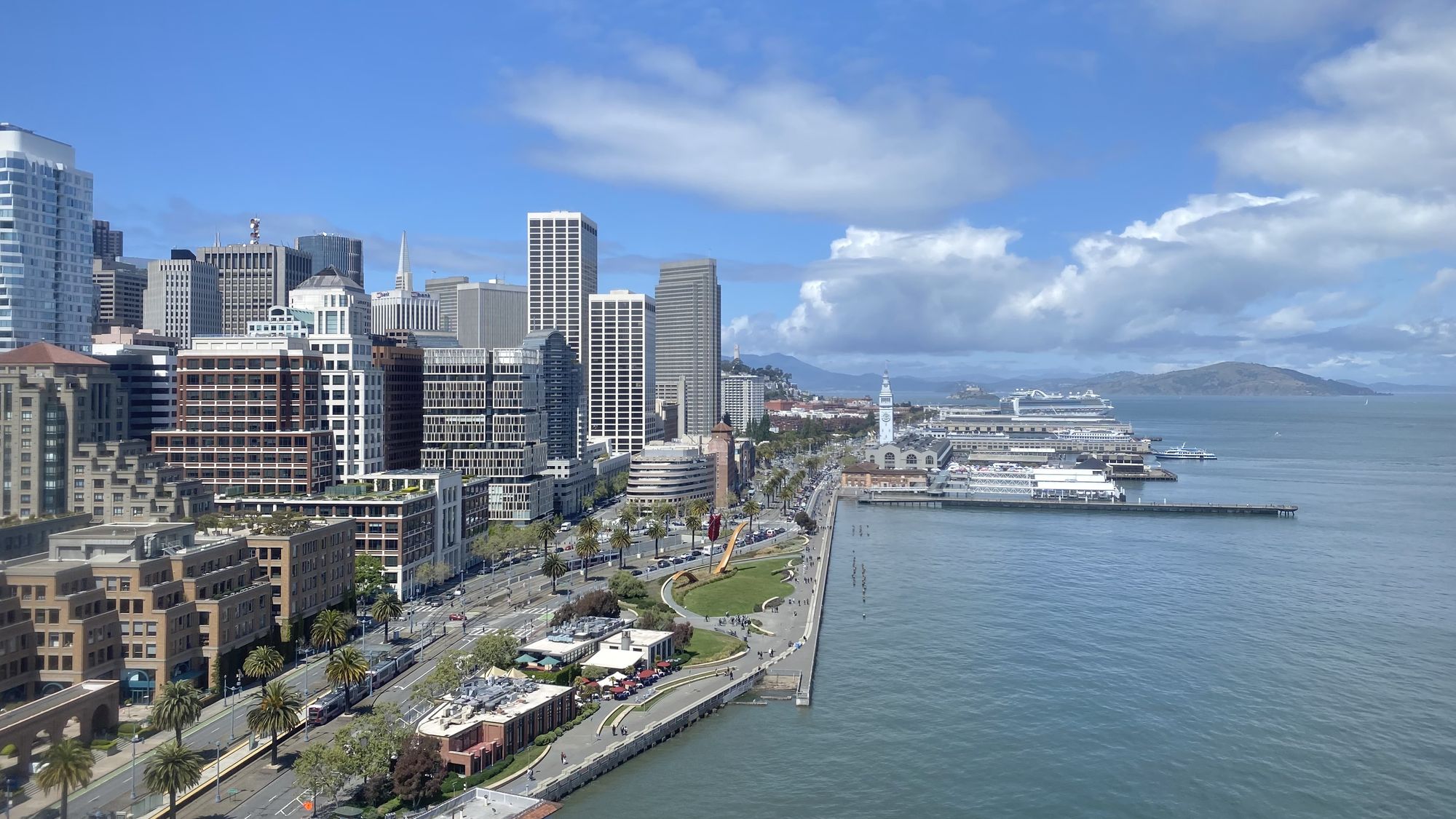
Photo: “San Francisco, California April 2022, Skyline along Bayfront” by Sharon Hahn Darlin, CC BY 2.0, via Wikimedia Commons; cropped.