How building washing and pressure washing differ in pressure, method and target surfaces, and how to decide which your commercial property needs.
Building washing and pressure washing are often used as if they mean the same thing, but they are different services aimed at different surfaces. Pressure washing is built for hard, durable surfaces like concrete. Building washing focuses on walls, trim, and facades, where high pressure can do more harm than good. Knowing the difference helps property managers write a clear scope and avoid damage to painted surfaces, sealants, and windows.
What Is Pressure Washing?
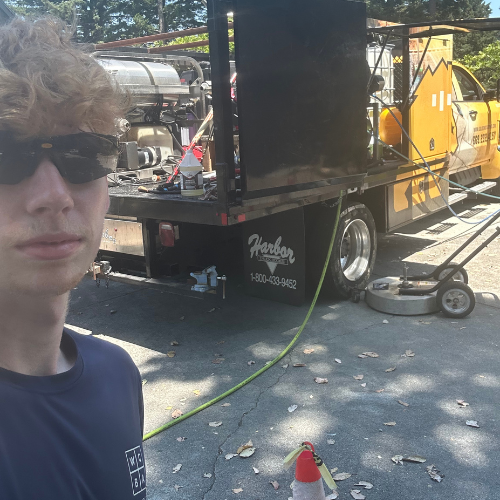
Pressure washing uses a concentrated, high-pressure stream of water to remove dirt, gum, oil, and staining from hard surfaces. On commercial properties it is typically used on sidewalks, entries, plazas, trash enclosures, dumpster pads, and parking areas. Surface cleaner attachments keep the spray at an even distance from the concrete, which gives a consistent finish across large areas.
What Is Building Washing?
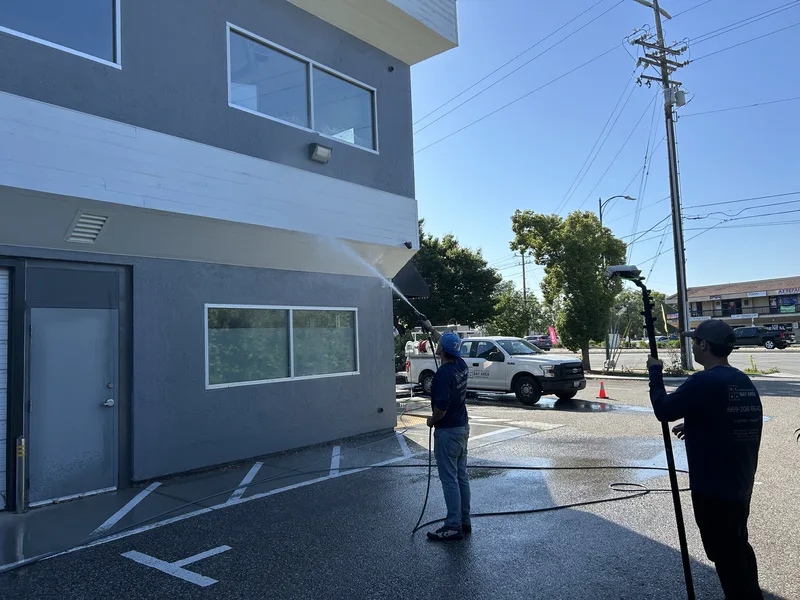
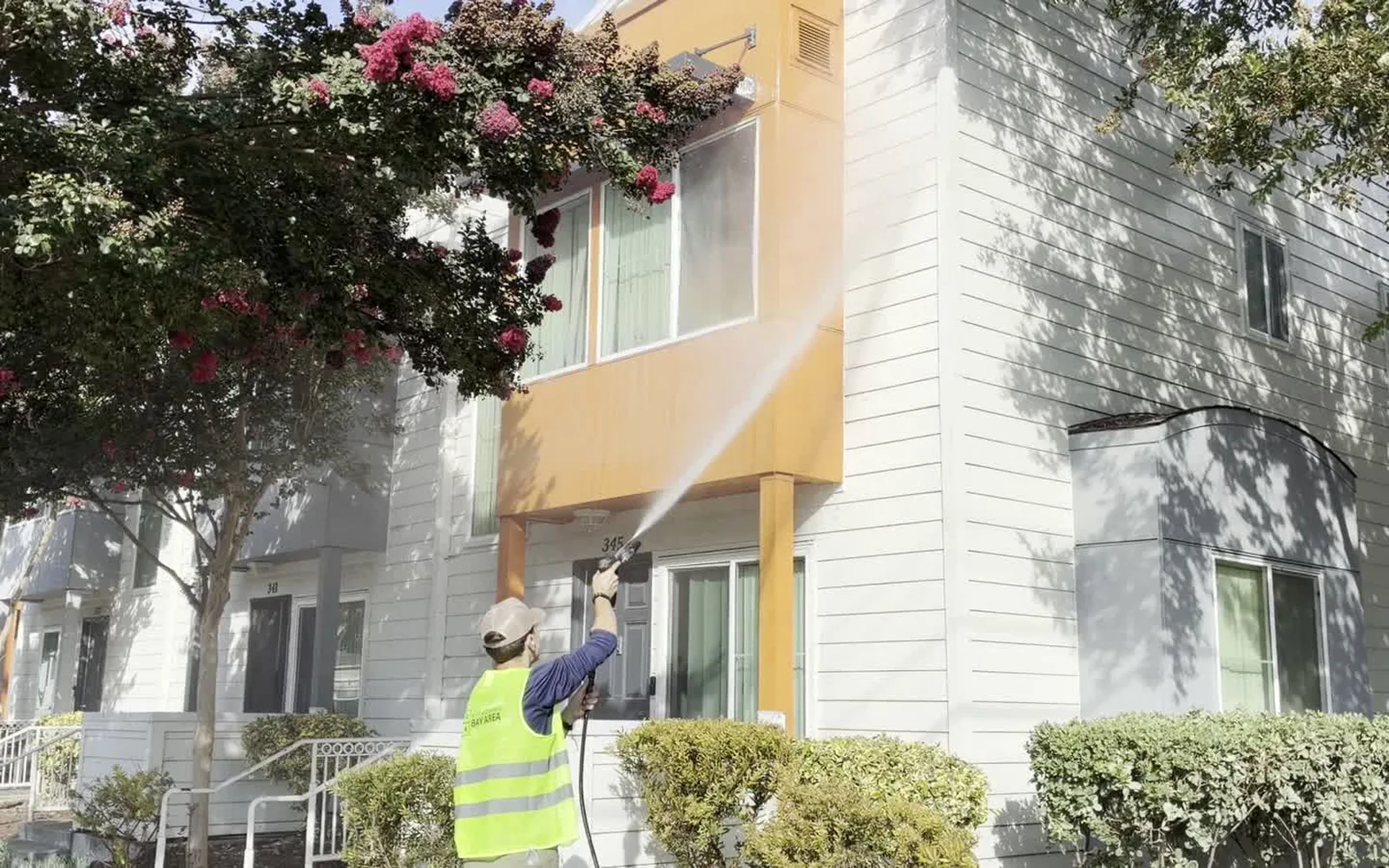
Building washing cleans the vertical surfaces of a structure: walls, columns, overhangs, soffits, trim, and sometimes signage. Because these surfaces include paint, stucco, siding, sealants, and window frames, building washing relies on lower pressure, controlled water application, and appropriate cleaning solutions rather than raw force. Soft washing is one common approach, using low pressure and a cleaning solution to lift dirt and organic growth.
Key Differences at a Glance
- Target Surfaces: Pressure washing is for flat, durable hard surfaces. Building washing is for walls, facades, and trim.
- Pressure Level: Pressure washing uses high pressure. Building washing uses lower pressure to protect finishes and seals.
- Cleaning Method: Pressure washing relies mainly on mechanical force. Building washing relies more on cleaning solutions, dwell time, and gentle rinsing.
- Risk Areas: High pressure on a building can strip paint, damage stucco, and force water past window seals and into wall cavities.
- Equipment: Building washing often uses extension poles and ladders to reach upper walls. Pressure washing uses surface cleaners and wands at ground level.
When Your Property Needs Pressure Washing
- Stained Walkways and Entries: Gum, foot-traffic staining, and spills on concrete.
- Dirty Trash Enclosures: Grease and food residue on dumpster pads.
- Oily Parking Areas: Drips and tire marks in stalls and drive lanes.
- Algae on Shaded Concrete: Dark, slippery growth on north-facing paths.
When Your Property Needs Building Washing
- Dirty or Streaked Walls: Dust, grime, and runoff streaks on paint, stucco, or siding.
- Cobwebs and Spider Debris: Buildup under eaves, overhangs, and around light fixtures.
- Organic Growth: Algae or mildew on shaded walls.
- Before Window Cleaning or Painting: A clean facade makes window cleaning results last longer and helps prepare surfaces for paint.
Many Properties Need Both
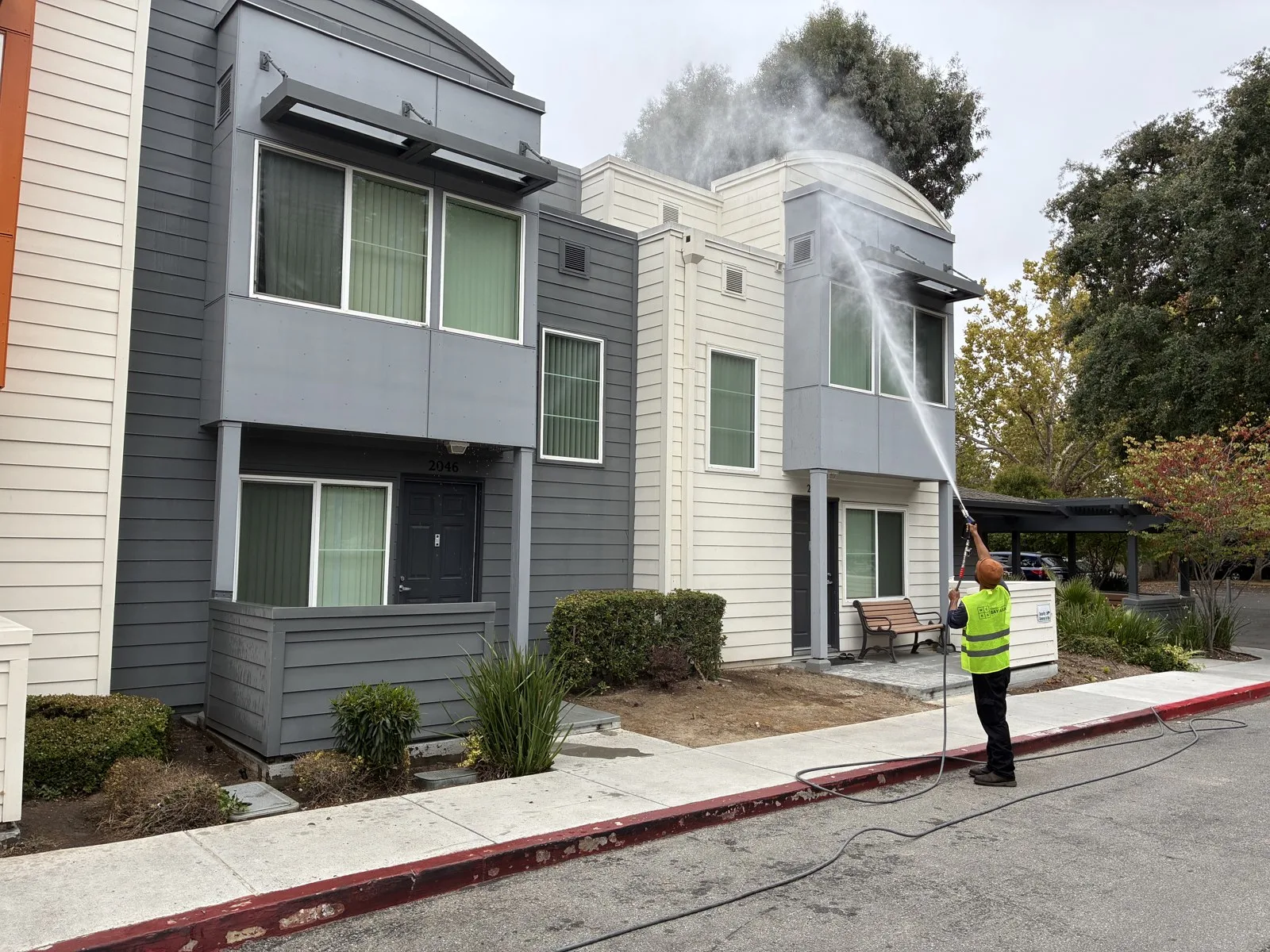
Most commercial properties benefit from both services. A typical project washes the building first, then cleans the exterior glass, and finishes with hard surfaces so any runoff or drips are removed from walkways at the end. On a San Jose office building project, our team washed the exterior building surfaces to remove loose dirt, buildup, and cobwebs, then cleaned the exterior glass.
Both services also fall under Bay Area stormwater rules. Wash water from building and surface cleaning should be kept out of storm drains, which our white paper on pressure washing stormwater runoff rules explains. For residential and smaller multifamily buildings, see our house washing service. For commercial properties, see our commercial pressure washing service.
Sources and References
Frequently Asked Questions
Is Building Washing the Same as Pressure Washing?
No. Pressure washing uses high pressure on hard surfaces like concrete. Building washing uses lower pressure and cleaning solutions on walls, trim, and facades.
Can You Pressure Wash a Building Exterior?
High pressure on walls can strip paint, damage stucco, and force water past window seals. Lower-pressure building washing methods are generally safer for facades.
Which Should Be Done First?
Building washing usually comes first, followed by window cleaning, with hard surface pressure washing last to remove any drips from walkways.
How Often Should a Commercial Building Be Washed?
Many commercial buildings are washed about once a year, or as needed for dirt, cobwebs, and organic growth. Hard surfaces like entries usually need more frequent cleaning.